AI Goes Operational: UK Restaurants Shift from Pilot to Profit as Back-of-House Tools Hit Critical Mass
With over 60% of UK restaurants now running some form of AI in operations and The Caterer dedicating a flagship webinar to AI workflow efficiency, the sector's experimental phase is over. The question is no longer whether to automate - it's who gets left behind.
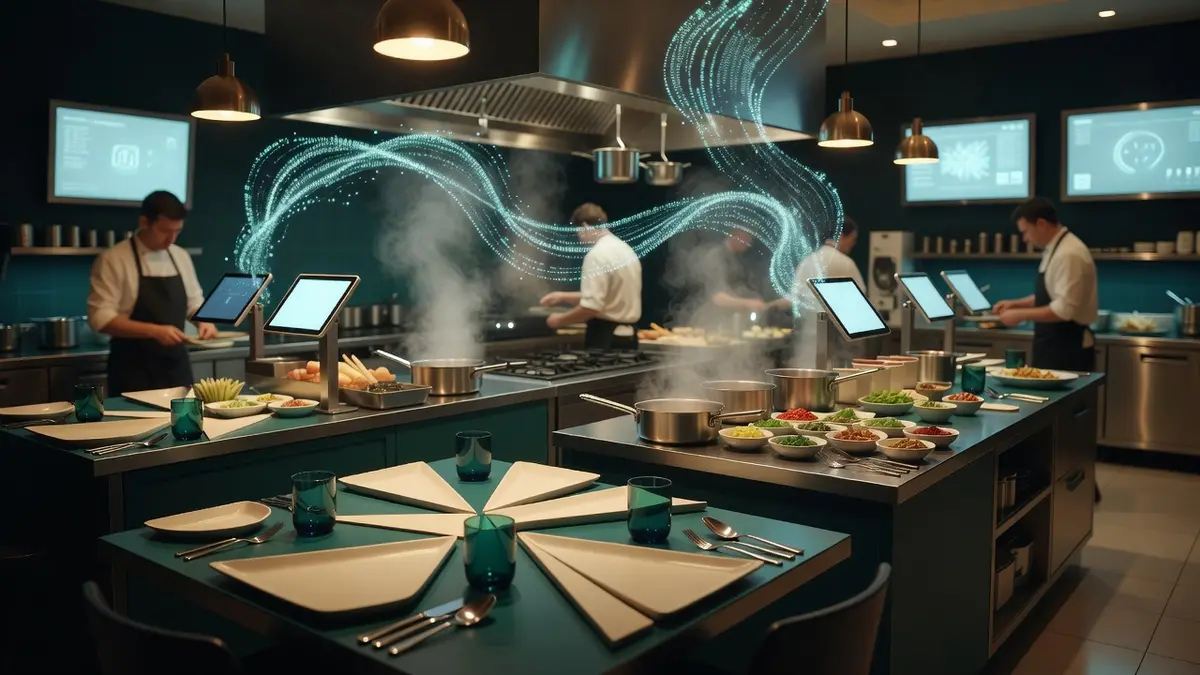
From Novelty to Necessity
Something changed this summer. Walk into a mid-sized UK restaurant group's head office right now and the conversation is no longer about whether to trial AI. It's about which systems actually hold up under Friday-night service pressure, and how quickly they pay back.
The numbers bear that out. Over 60% of UK restaurants are now piloting or actively using some form of AI automation, up from fewer than 25% in 2023, with adoption running fastest among chain and quick-service operators. A 2026 survey found that 80% of UK restaurant owners say they feel ready to adopt new technology, a readiness figure that would have looked absurd three years ago.
Advertisement

The Caterer has been tracking this closely. Its scheduled 'Driving Operational Efficiency with AI' webinar, a step-by-step guide to embedding AI into hospitality workflow, signals just how mainstream the conversation has become. This is no longer a niche tech session for early adopters; it's compulsory continuing education for operators who want to stay solvent.
What's Actually Working
Strip away the hype and a clear pattern emerges. The implementations that stick are narrow, specific, and tied to real pressure points rather than attempts to redesign the entire guest journey.
Labour scheduling is the most consistent win. Solutions combining demand forecasting, machine learning, and real-time sales data have produced measurable results: Burger King UK achieved a cost-neutral labour model through AI-led scheduling, while Distinctive Inns cut labour costs by 2.8% and grew like-for-like sales by 7.7% using similar tools. With 67% of UK restaurant owners citing labour as their top cost concern, that's not a marginal gain.
Inventory is the second front. AI-powered demand forecasting, pulling in historical sales, weather patterns, local events, and social media trends, is helping kitchen managers order precisely, cutting both waste and supplier spend. For restaurants operating on 8-12% net margins, the arithmetic is simple.
Then there's guest-facing AI. Voice technology is quietly plugging one of hospitality's most persistent gaps: the missed booking call. Restaurateurs are adopting voice AI to catch missed calls, capture bookings, and free up staff, not as an experiment, but as a fix for a real operational problem.
Toast IQ and the Platform War
The most significant structural development of 2026 is the emergence of unified AI platforms sitting across the whole restaurant stack. Toast has repositioned its intelligence layer, Toast IQ, as a conversational AI assistant with access to real-time and historical data across approximately 148,000 customer locations, purpose-built for hospitality and designed as an operator's 'right hand.'
Rather than a dashboard that displays data, Toast IQ enables operators to ask plain-language questions, receive proactive recommendations, and take direct action, updating menus, editing shifts, within a single interface. Its Spring 2026 product release included Toast IQ Grow, a marketing-focused module designed to handle the day-to-day work of running restaurant marketing campaigns autonomously.
That single-platform data advantage matters enormously. Frustration with fragmented tech is driving a push toward unified platforms, and industry experts have predicted a wave of mergers among restaurant tech providers through 2025 and 2026 to offer end-to-end solutions. Toast is moving to be the platform others consolidate around.
The Regulator Is Watching
AI is also entering the compliance stack. The Food Standards Agency has piloted an AI system to support hygiene inspections by predicting which restaurants or food businesses are at higher risk of violating hygiene rules, a development that carries real implications for operators who assume food safety is still purely a human-judgement call. Smart operators are already using AI to strengthen their own compliance monitoring before the FSA inspector arrives.
Brands, Booze, and a Trademark Warning
For food and drink brands riding the AI wave, one data point should give pause. According to AIBD analysis of IPO (TMD) data, UK trademark filings in Nice Class 33, covering alcoholic beverages excluding beer, totalled just 252 in Q3 2026, a fall of 62.6% against the prior period. That's a dramatic contraction in spirits and wine brand activity at the UK Intellectual Property Office, sitting awkwardly against the broader narrative of sector confidence.
Class 33 is the filing class that tracks where drinks brands are placing long-term bets on their identity. A collapse of this magnitude suggests that either drinks businesses are deferring brand investment decisions, or the economics of launching new spirits propositions in the UK have turned hostile enough to kill new entrants at the filing stage. Either way, operators building wine lists and cocktail menus around new brand partnerships should be taking note.
The Efficiency Gap Is Widening
There is a darker undercurrent to all of this. Larger chains can absorb failed AI pilots and keep iterating. Independent operators and smaller groups often face a different reality, where the cost of getting it wrong is much higher. That gap is becoming one of the defining structural trends in UK restaurant technology.
AI works best when it supports people rather than attempts to replace them. The most successful implementations are those where automation frees front-of-house staff for higher-value guest interaction rather than eliminating the human warmth that defines hospitality.
But 'we'll get round to it' is no longer a viable position. The summer of 2026 has drawn a line.