TikTok Shop Is Now the UK's No.2 Beauty Retailer - and Most Sellers Still Have No Trademark
Fresh data puts TikTok Shop ahead of every UK beauty retailer bar one. The sellers riding that wave are building brand equity on a platform they don't own, without IP they don't hold.
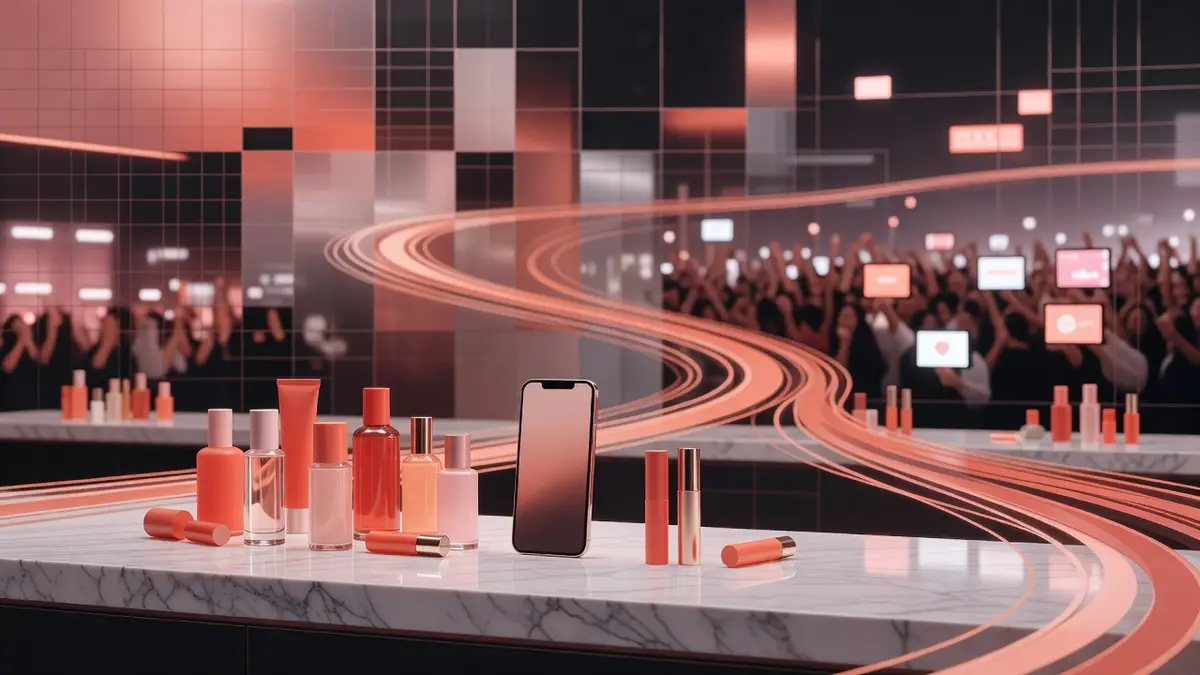
TikTok Shop has quietly staged one of the more remarkable land-grabs in UK retail history. What started as a viral curiosity is now, according to a July 2026 report by Public First cited by BeautyMatter, the UK's second-largest beauty retailer, having posted 60% year-on-year growth. That is not a rounding error. That is Boots-territory, achieved in roughly four years flat.
The Public First analysis, commissioned by TikTok and incorporating economic modelling from EY, puts the platform's total contribution to the UK economy at at least £10 billion in gross value added during 2025, sustaining an estimated 153,000 jobs. The report drew on surveys of over 4,000 UK adults, more than 1,000 businesses and 336 creators. TikTok now claims more than 30 million monthly active users in the UK, with over a third of them aged 35 or above: a demographic point that should reframe anyone still filing TikTok under "teen content."
Advertisement
The Shopper Has Changed. The Seller Hasn't.
The mechanism driving all this is what TikTok calls "discovery commerce." Rather than searching by brand, users follow what ChannelX describes as a search-learn-buy flow: they arrive without a specific product in mind, watch a creator explain a skin concern or ingredient, and convert from the same screen. Beauty-focused LIVE shopping sessions in the UK grew 90% in 2025, with more than 6,000 sessions running daily on the platform.
New Savvy research, published this week and picked up by ChannelX, puts hard numbers on the consumer side. Nearly half of Gen Z and millennial shoppers, 47%, used TikTok Shop to browse or buy in the past three months, against just 21% of UK shoppers overall. Among that younger cohort, 64% watched product reviews or recommendations on social media in the past month, and 57% said they enjoy live shopping events. These are not vanity metrics. They map directly to conversion.
The category is also broadening. Social shopping was once shorthand for lipstick and leggings. Savvy's data shows consideration now extending into household and kitchen items, cleaning products, gadgets and food: categories where traditional grocery multiples thought they had the shelf.
Selling on Someone Else's Platform
Here is where the story gets uncomfortable. Brands, particularly small DTC operators, are scaling hard on TikTok Shop without doing the basic IP housekeeping that protects them once they get big enough to copy. The platform's own seller guidance is direct on this: brands with existing trademark registrations receive priority verification and access to brand protection tools. Those without one are in a different queue entirely, and a slower one.
The counterfeit risk is real and documented. As brand protection specialists at BrandShield note, bad actors use non-obvious cues, emojis, nickname substitutions, "DM for details" patterns, to evade keyword filters while remaining legible to buyers. Once a fake listing moves through a creator's affiliate storefront, the reputational damage attaches to the original brand, not the seller of the fake. Beauty, apparel and consumer electronics brands have all documented counterfeit inventory appearing in TikTok Shop affiliate feeds.
The structural exposure is significant. AIBD analysis of Companies House and IPO data shows 4,208 new SIC 47.91 (internet retail) companies registered in Q3 2026, down 76.2% on the prior period, suggesting the formation sugar rush is cooling. But the IP gap remains wide open: 97.6% of active SIC 47.91 companies hold no Class 18 UK trademark. Class 18 trademark filings fell to just 473 in Q3 2026, a 70.9% drop versus the prior period. Brands selling bags, accessories and packaging goods on TikTok Shop, all Class 18 territory, are overwhelmingly unprotected. Source: AIBD analysis of Companies House and IPO data, as of July 2026.
Class 3, covering cosmetics and skincare, is the obvious parallel. If you are selling a serum through a creator affiliate and your name is not registered, a copier can list under a near-identical mark before you even notice the problem. TikTok's IP reporting workflow requires proof of trademark rights as part of any takedown submission. No registration, no leverage.
The Maths of Going Viral Unprotected
Consider the unit economics. Average affiliate commission rates on TikTok Shop UK run 15–20% for beauty and personal care, with platform fees of up to 9% on top. That is a hard margin structure. Brands absorb it because the customer acquisition cost on a viral creator moment is, temporarily, near zero. But that same virality is the trigger that attracts counterfeiters. The moment a product cracks the algorithm, the window to file or enforce IP narrows sharply.
Some 28% of businesses using TikTok report having sold out of a product because of TikTok and TikTok Shop effects. Selling out is great. Selling out while a copycat lists the same SKU name the following week is a different outcome entirely.
The Public First report projects TikTok could contribute a further £27 billion to the UK economy by 2030. That is the size of the opportunity. The question for every founder riding the TikTok wave right now is whether their brand name will still be theirs by the time they get there.