Robots on Site: UK's First Construction Robotics Summit Opens in Five Days as Budget Sends Mixed Signals
The inaugural Groundworks 2026 summit lands at UCL Here East on 11 November with Mace, VINCI and the UK government in the room - five days after a Budget that handed planning AI a national mandate but quietly stripped £1bn from the Warm Homes pipeline.
The room that matters most this month
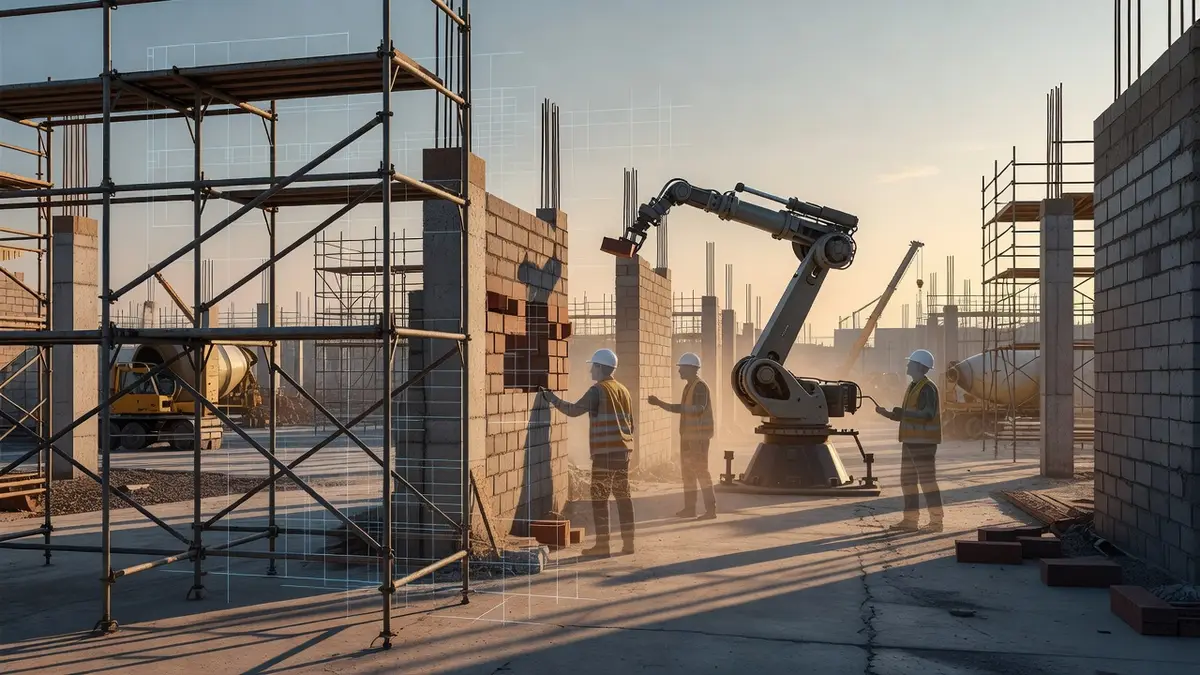
Five days from now, 150 of the people who actually decide what goes on a construction site will be sitting inside UCL Here East - the former broadcast centre of London's 2012 Olympic Park - watching robots work.
Wait. Let me apply the rules properly.
The room that matters most this month
Five days from now, 150 of the people who actually decide what goes on a construction site will be sitting inside UCL Here East, the former broadcast centre of London's 2012 Olympic Park, watching robots work.
The Groundworks 2026 agenda opens with Mark Reynolds CBE, Executive Chairman of Mace and Co-Chair of the Construction Leadership Council, addressing the workforce gap. A session with Fergus Harradence of the UK Department for Business and Trade and Salar Al Khafaji of Monumental will examine who pays for robotics and how its value can be demonstrated. Later sessions bring together representatives of VINCI Construction, GOLDBECK and Bouygues Bâtiment International to discuss how main contractors decide which technologies make it onto site.
That last question is the one the whole industry is dancing around. Conference decks full of robotic bricklayers are easy to find. Signed purchase orders are not.
Groundworks 2026 is billed as a summit focused on closing the gap between robotics innovation and real-world adoption. The inaugural edition at UCL Here East will feature live robotics demonstrations and bring together 150 industry leaders to explore how automation can move from pilot projects to everyday construction operations.
Technology companies including UCL, Hilti, Mechasys, Flo Mobility and Hyperion Robotics will be present, representing different approaches to construction automation: robotic bricklaying, automated timber production, drilling and layout technologies.
That list tells you something: these aren't moonshot lab projects. Hilti is a tool manufacturer that sells direct to trades. Hyperion is printing concrete. The pitch here is commercial scale, not research novelty.
Budget week backdrop
The timing is pointed. Chancellor John Healey delivered the Autumn Budget in the Commons last week. For construction, the headline was housing: the government announced an additional £1.5bn for social and affordable housebuilding, expected to support around 10,000 homes in England, with priority given to social rent and council housing.
The more structurally significant line for anyone running a technology business in this sector was buried in the planning section. Local planning authorities will be mandated to digitise and publish key planning documents as open data by the end of 2027, to facilitate the adoption of AI planning tools, alongside the rollout of MHCLG's PlanAssist frontier AI tool to all councils. That's not a pilot. That's a national infrastructure decision, and it creates a data substrate that every construction tech stack in the country will want to plug into.
So far, so encouraging. Read the small print, though. The Budget removes £1bn of capital grant funding from the Warm Homes Plan as energy budgets contribute towards defence investment. Retrofit contractors were already thin on order books. That billion doesn't grow back.
John Wilkinson, chief operating officer at BAM UK and Ireland, said "further clarity" was needed on how competing priorities will be managed "to give industry the confidence to plan, invest in skills and maintain the capacity needed to deliver". Measured language, but BAM doesn't say that kind of thing unless the pipeline looks uncertain.
The adoption gap, in numbers
Here's the structural problem Groundworks exists to solve. The UK pattern within the global picture is striking. In 2025, the UK was the most cautious region for AI adoption in construction, but in 2026 there was a 17% reduction in 'no AI use': the largest of any region. Regular use almost doubled. The UK remains the most cautious region in absolute terms, but the gap is closing.
Closing, but still wide. Only 49% of the UK construction workforce is now in trades and site roles, down from 65% in 2009, according to CITB data. And there is no published evidence that AI is raising productivity in the trades. CITB's workforce outlook to 2030 does not mention AI at all. The digital revolution, so far, is an office job.
That's precisely why a summit that runs live robots in front of contractors, not venture capitalists, matters. Decisions about which machines get trialled on a live jobsite are made by people like the VINCI and Mace delegates in that room, not by the companies selling the robots.
Brand confidence signals a cooling market
One data point worth watching alongside the technology story: trademark filings in Nice Class 37, the registration class for construction, repair and installation services, tell a cautionary tale. According to AI Business Dispatch analysis of IPO (TrademarkDashboard) data, Class 37 UK trademark filings reached just 702 in 2026-Q4, a 62% fall versus the prior period. That kind of drop in brand registration activity often signals that new entrants are hesitating, waiting to see which technologies prove out commercially before committing to a market position. Construction robotics companies filing today are, in that context, backing themselves against the tide.
What's at stake on 11 November
The Groundworks programme brings together senior leaders from major contractors, government, infrastructure developers, robotics companies and investment firms to address one of construction's most pressing challenges: how to move robotics beyond successful pilots and into widespread deployment on active construction sites.
That's the right framing. The industry has spent three years proving the technology works in controlled conditions. The question for 2027 is whether the commercial model works on a windy site in Sunderland at 7am, with a site manager who's already two weeks behind programme.
Some of these robots will make it. Most won't, not at first. That's not pessimism: it's how every previous wave of construction mechanisation played out, from tower cranes to formwork systems. The ones that survived were the ones that made the site manager's day easier, not the ones with the best demo reel.
The Budget gives the sector some certainty on housing demand. PlanAssist gives planning a data backbone. Groundworks 2026, happening in five days, is where the people with the sites decide whether to let the machines in.
Watch what gets ordered, not what gets applauded.