Counterfeit Toys Surge to Third-Most-Investigated Category as UKIPO Data Exposes High-Street Brand Risk
The UKIPO's freshly published Trading Standards Survey shows counterfeit toy investigations more than tripled in a year, implicating well-known consumer brands from Red Bull to Coca-Cola. With Class 25 filings already falling, the survey is a warning that brand owners cannot afford to treat physical retail as a low-risk channel.
Toys Jump from Fringe to Front Line
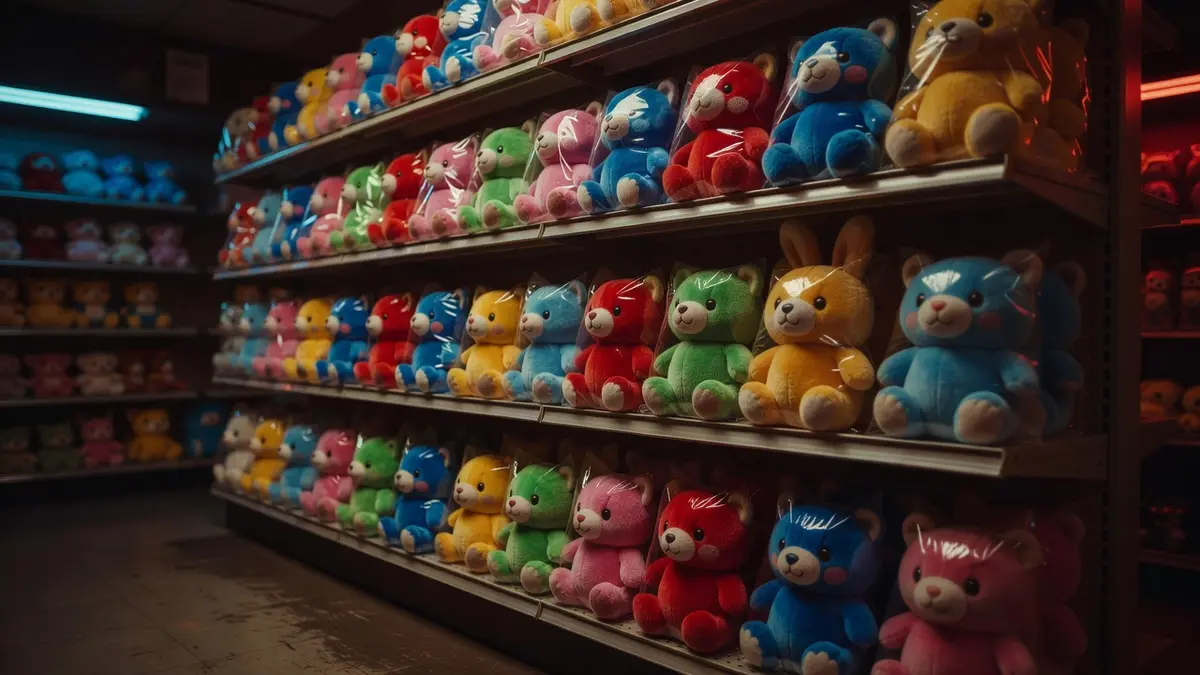
The UK's high street has a counterfeiting problem growing faster than enforcement can keep pace with. Published on 8 September 2026, the UKIPO's annual Trading Standards Survey, covering April 2025 to March 2026, confirms that counterfeit toys are now the third most commonly investigated category of fake goods across England and Wales. Cigarettes and tobacco lead at 89% of responding local authorities, followed by clothing at 69%, with toys at 67%, up from just 21% the previous year. That is a rise of 46 percentage points in twelve months.
Survey responses came from 142 of 189 local authorities. Physical shops remain the dominant enforcement location: 87% of respondents investigated counterfeit goods in ordinary retail premises, compared with 35% on social media and 25% at outdoor markets and websites. The data punctures any assumption that brand risk migrated online. The high street is still where the fakes land.
Advertisement
The Brand Damage Is Already Named
The harm here is concrete, not abstract. Sales data reviewed by trade publication Better Retailing, covering approximately 13,000 convenience stores, found counterfeit toys bearing Red Bull, Coca-Cola, and Monster branding on shelves, with combined sales across those three variants exceeding 20,000 units. These goods exploit registered trademarks in Class 32 (beverages) and, through branded merchandise, effectively in Class 28 (toys and games), all without authorisation and all without the quality or safety controls those brands depend upon.
Safety failure is not a secondary concern. The IPO's own "Fake Toys, Real Harms" campaign, run with toy retailers and local authorities, found that 75% of counterfeit toys seized in raids failed critical safety tests. Border Force intercepted 259,812 counterfeit toys at UK borders in a single year, at an estimated retail value of nearly £3.5 million; 90% were counterfeit Labubu dolls.
Organised Crime: The Supply Chain Nobody Registers
Brand teams often treat counterfeiting as a commercial irritant. The survey data should reframe that view. Around 64% of responding local authorities identified links between counterfeiting and organised criminal groups during investigations, roughly one-third higher than the previous year. Money laundering featured in 41% of reports. Some 29% identified connections to serious organised crime groups, 25% to people trafficking or modern slavery, and 24% to drug dealing.
Counterfeit goods are, in the UKIPO's own framing, "anything but harmless bargains." For brand owners, that matters beyond sentiment: it affects reputation, supply-chain due diligence obligations, and the credibility of any enforcement action that seeks to separate a brand from criminal networks.
Class 25 Filing Signals Deserve Scrutiny
This report arrives alongside a troubling trend in the trademark register itself. According to AI Business Dispatch analysis of IPO (TMD) data as of September 2026, UK Class 25 trademark filings reached 4,487 in Q3 2026, a decline of 15.1% against the prior period. Class 25 covers clothing, footwear, and headgear, the category second only to tobacco in Trading Standards investigations.
A falling filing rate in a class with rising enforcement pressure is a structural mismatch. Brands that narrow their registration footprint at exactly the moment counterfeiters are expanding theirs concede ground that is difficult to recover. A mark not on the register cannot be used to demand seizure at the border or to ground an opposition before the UKIPO.
The UKIPO's modernisation programme adds further context. The office enters a discovery phase this month, September 2026, for overhauling its trademark search and filing platform, with plans to incorporate AI-assisted tools to handle a growing volume of non-traditional filings: sounds, gestures, and multimedia marks. Charlotte Champion, Head of Trade Marks at the UKIPO, flagged the review at the INTA Annual Meeting in London earlier this year. The new system is expected to improve how examiners detect conflicts across a wider range of mark types, strengthening the register's utility as an enforcement tool.
The Sovereign AI Wrinkle
One further development adds an IP-ownership dimension that brand teams should register. The UK Government's Sovereign AI R&D Procurement Scheme explicitly allows funded start-ups working with the Department of Health and Social Care to retain the intellectual property they create. Firms developing AI systems that replicate brand identities, logos, sounds, likenesses, as part of government-backed pilots will own those outputs commercially. The implications for adjacent brand owners are not yet tested, but the question of who controls AI-generated brand signals is becoming concrete rather than theoretical.
What Brand Owners Should Do This Week
Run an audit of your Class 25 and Class 28 registration portfolios against the product categories flagged in the UKIPO survey: clothing, toys, branded merchandise. If you hold marks in Class 32 or own character IP that appears on licensed goods, check whether those licences extend to novelty and toy categories and whether your marks are registered in Class 28 as well as your primary class. Where gaps exist, file before the register cools further.
Consult a qualified trademark attorney or use TrademarkDashboard to map current UK filing coverage against the counterfeit hotspots the survey identifies. This is not a story about online brand abuse. It is about physical retail, physical seizures, and physical harm, and the brands whose names appear on those fake products bear reputational cost regardless of fault.