AI Uptake Hits 57% on UK Sites But Skills Crisis Is Stopping Firms Cashing In
New FMB and CIOB survey data, published two days ago, shows the majority of UK construction businesses are using AI more than a year ago - but chronic skilled-trades shortages and cost pressure are undermining every efficiency gain on the ground.
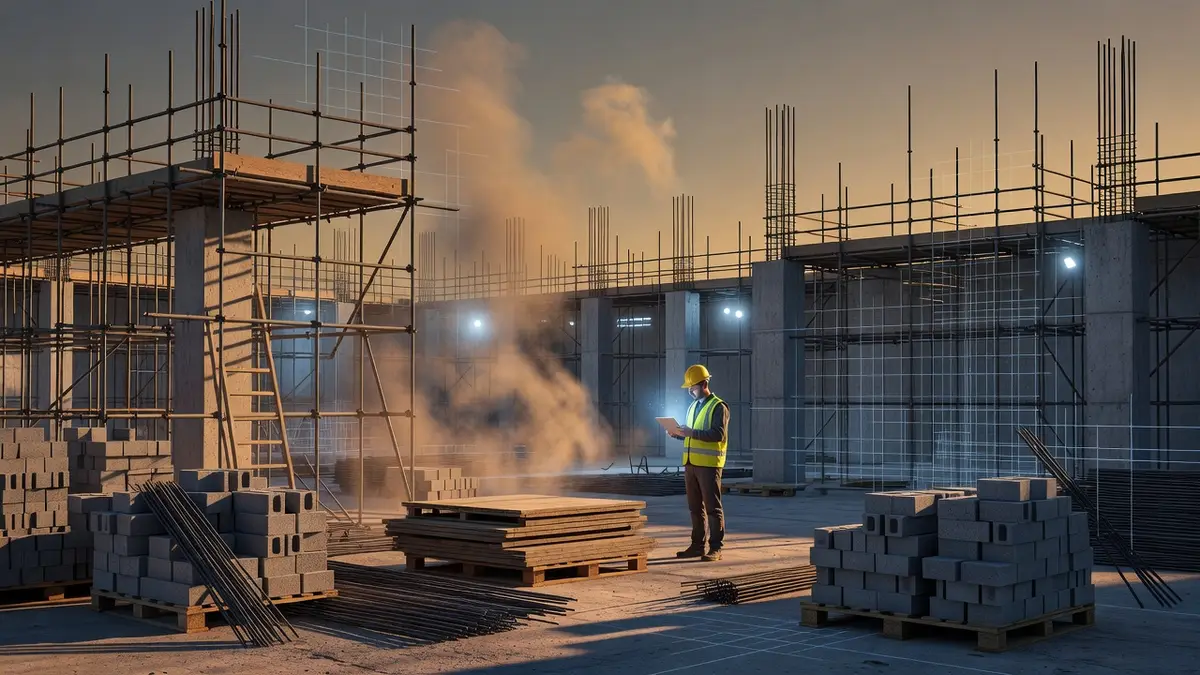
More than half of UK construction firms are now using artificial intelligence in their day-to-day operations, according to the latest State of Trade Survey from the Federation of Master Builders and the Chartered Institute of Building, published Wednesday. The headline number, 57% reporting increased AI use versus a year ago, is a meaningful step change. It was not long ago that talking to a small builder about machine learning would get you a look usually reserved for someone suggesting you tile a bathroom with margarine.
Scratch the surface, though, and the picture is more complicated than a press-release percentage suggests.
Advertisement

AI in the Back Office, Not the Groundwork
The survey makes clear where the technology is actually landing. A third of respondents, 33%, are using AI in site operations, health and safety, and quality management. That is real. Computer vision for PPE compliance, predictive-analytics platforms flagging near-misses before they happen, AI-assisted document control under the Building Safety Act's Golden Thread requirements: these are live deployments, not pilots written up in a brochure.
The bigger take-up, however, is administrative. Tender preparation, project scheduling, invoice chasing, quote generation. That is consistent with what this desk has been watching all year: quoting, scheduling, and lead handling are the three functions where AI pays back fastest for small and mid-tier contractors, because they are high-volume, still largely manual, and do not require a groundworker to change what he does with a shovel.
FMB chief executive Brian Berry did not oversell it. Technology, he said, "is not a silver bullet": more firms reported falls than increases in workloads, enquiries, and employment during the survey period. When the pipeline is thin, efficiency tools help the margin but do not conjure new work.
The Skills Hole That AI Cannot Fill
Here is the number that cuts through the AI hype. Among firms actively recruiting, 45% said they could not find staff with knowledge of modern sustainable building practices, and 37% struggled to hire workers with knowledge of the building safety regime. That is not a technology problem. That is a training pipeline problem that has been building for a decade, and no large-language model is going to fix it by 2030.
The CITB projects that construction will still need roughly 41,200 additional workers per year between 2026 and 2030 to meet demand. The sector's projected workforce sits at around 2.68 million, and even optimistic AI-displacement forecasts do not dent that requirement for skilled site labour. AI is compressing administrative and junior-professional roles. It is not laying bricks.
That skills gap has a direct knock-on for materials. With fewer trained tradespeople available to absorb and install new products, the BCIS building materials data published last week makes harder reading still: brick deliveries continued to trend weak in Q3 2026, with ready-mixed concrete deliveries down 6.1% year-on-year in Q2 and still more than a third below pre-pandemic 2019 levels. Supply chains have eased since the worst of the post-pandemic disruption, but demand simply is not there to absorb the production capacity that exists.
The Golden Thread: Where AI Becomes a Compliance Tool
One area where AI adoption is quietly becoming non-optional is compliance documentation under the Building Safety Act. For higher-risk buildings, the requirement to evidence the Golden Thread of information is generating a volume of project data that overwhelms manual management. AI-backed information systems are shifting from competitive advantage to de-facto operational requirement, and that is concentrating minds among project managers in a way that no amount of innovation marketing ever did.
The RICS Q3 2026 UK Construction Monitor, also published this week, shows financial constraints remain the dominant obstacle to activity, cited by 67% of respondents, followed by planning and regulation at 61%. Materials shortages were flagged by a quarter of participants, up from 18% in Q1 2026, pointing to lingering supply-chain pockets that the broader trend of weak demand does not eliminate entirely. Infrastructure is the standout positive: the 12-month workload expectations net balance for infrastructure rose to +34%, giving larger contractors with the balance sheet to invest in AI tooling a clear runway.
Brand Activity Tells Its Own Story
In the IP market, activity in Nice Class 19, the trademark class covering non-metallic building materials including timber, stone, cement, and glass, has dropped sharply. AI Business Dispatch analysis of IPO (TMD) data puts UK Class 19 filings at just 240 in Q4 2026, a fall of 47.5% against the prior period. When specifiers and product manufacturers pull back on brand registration, it typically tracks weak end-market confidence. That figure aligns with the demand softness visible in the BCIS bricks and concrete data. Firms are not investing in new product ranges when they cannot shift existing stock.
What Comes Next
Berry's call for the government to give small firms "practical support" to adopt new technology is fair, but vague. The specifics matter: skills bootcamps calibrated to trades rather than tech graduates, subsidised access to AI-native project management platforms for sub-twenty-employee contractors, and planning reform that actually delivers the housing pipeline necessary to justify the investment.
For now, 57% adoption sounds like the industry is catching up. The ground truth is that most of that adoption is a chatbot writing the quote letter. The harder work, embedding AI into site safety workflows, compliance documentation, and supply-chain forecasting, is where the genuine productivity gain lives. That requires both the technology and the people who understand how to run a site. Right now, the second half of that equation is in shorter supply than the first.