AI Cloned Him, Then Named the App After Him: LeBron's Suit Puts Every Athlete Brand on Notice
A US federal complaint filed four days ago - combining trademark infringement with AI-likeness theft - is the clearest signal yet that sports and entertainment brands cannot rely on registration alone when generative AI can conjure a convincing synthetic endorser overnight.
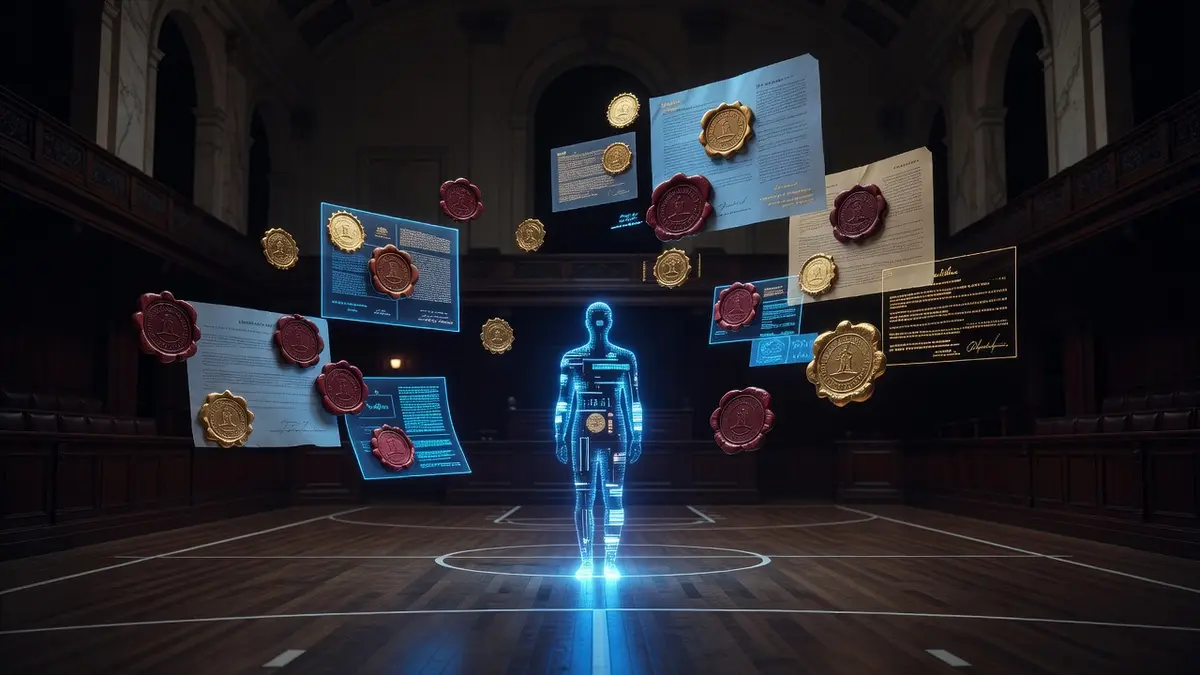
When a Synthetic Avatar Becomes a Trademark Problem
The case sounds almost implausible. A startup called PlayVision launched a sports-betting analytics app this month, named it "Bron," then ran a marketing campaign featuring an AI-generated figure that replicated LeBron James's build, tattoos, voice, and jersey number. Within twenty-four hours the advertisement had a million views: "exactly as Defendants intended," according to the complaint. In Lanham Act terms, it is a fairly audacious double-dip: use the man's identity and use his name.
LeBron James and LBJ Trademarks LLC filed the federal complaint on 17 November 2026 in Manhattan federal court, naming PlayVision and co-founders Anish Gupta and Marc Zoghby as defendants. The case (numbered 1:26-cv-10078) includes claims of trademark infringement and false endorsement: the trademark claim challenges the Bron name itself, while the false endorsement count concerns whether the AI-generated advertisement created the impression that James approved the product. The plaintiffs also invoke New York's newer statutory rules governing AI-generated performers in advertising, a legislative layer that sits on top of common-law publicity rights.
Advertisement

The lawsuit asserts that LBJ Trademarks holds common-law trademark rights in "Bron" and related identifiers, built on decades of commercial use. James's attorneys argue the name refers to only one person in any sports context. PlayVision had not publicly filed a response as of Wednesday morning.
Why This Case Cuts Across Multiple Trademark Classes
For brand owners and their advisers, the instructive detail is not the celebrity involved but the class structure of the exposure. PlayVision is operating in what a Nice Classification filing would describe as Class 41 (entertainment and sports information services), potentially Class 36 (financial information, given the subscription-based odds and betting-analytics product), and Class 42 (software-as-a-service). The "Bron" name touches all three.
Sports and entertainment businesses have historically viewed Class 41 as the natural home for protecting athlete and performer names. But AI-generated advertising now creates liability across whichever classes the infringing product spans. If the synthetic likeness promotes a software subscription, the brand damage lands in Class 42 and Class 36 as much as in Class 41.
A parallel development in Europe sharpens the same point. In October, Italian Prime Minister Giorgia Meloni filed an EU trademark application with the EUIPO for her voice, a sound mark, citing concern that AI makes convincing voice impersonation increasingly easy. The EUIPO's rules already establish that a sound can qualify as an EU trademark, and that application is currently under examination. Where Meloni sought a proactive registration, James is now pursuing reactive litigation. Both are, structurally, answers to the same problem: the ease with which generative AI can synthesise a recognisable human identity and deploy it commercially.
The Class 45 Filing Drop Nobody Is Discussing
Here is where UK filing data makes the picture more urgent for brand owners on this side of the Atlantic. According to AI Business Dispatch analysis of IPO (TrademarkDashboard) data, Class 45 UK trademark filings stand at just 826 in Q4 2026, a fall of 52.5 per cent against the prior period. Class 45 covers legal services and personal and social services; it is also the class most commonly used to protect identity-management and name-licensing arrangements, the precise vehicle that talent, athletes, and their rights-holding entities use to formalise personality-brand protection in the UK.
A drop of that magnitude in a quarter is not a seasonal blip. It may reflect the post-April 2026 UKIPO fee increases biting (the first across-the-board rise in five years) or a broader strategic hesitation as brand owners recalibrate after the abolition of series marks. What it should not be is an excuse to defer filing. The LeBron case illustrates that the absence of a registered mark forces a claimant to rely on common-law rights, which are harder, slower, and more expensive to enforce.
The UKIPO's own Corporate Plan has identified AI as a priority tool for improving examination, particularly of non-traditional marks such as sounds and gestures, with a full platform overhaul for trade mark services under way. UKIPO's Charlotte Champion has noted that AI is currently used in a limited way (figurative mark searches, primarily) but its role is set to expand. When the "One IPO Search" platform launches in full, with AI-assisted search, the ability to monitor for synthetic-likeness conflicts may improve. That day is not today.
The Structural Weakness AI Exploits
Generative AI has found the gap between what is registered and what is used. PlayVision did not need to register anything to launch a campaign that allegedly looked, sounded, and moved like LeBron James. The asymmetry is brutal: the rights holder must register, monitor, enforce, and litigate; the infringer need only prompt a model.
The same structural weakness applies to any professional with a distinctive voice, face, or creative signature. Practitioners, broadcasters, and sports personalities whose names function as commercial identifiers should treat the Bron case as a prompt. Not because US federal litigation is directly binding in UK courts, but because the underlying technology is identical and the AI Act's Article 50 transparency obligations (which began to apply on 2 August 2026) have not yet been tested in an identity-misuse context.
The practical question for any brand owner this week is not whether their mark is registered but whether the registration covers the classes where an AI-generated impostor could do the most commercial damage.
What Brand Owners Should Do This Week
Map your exposure by class, not by name. If your personal or corporate brand is commercially active in entertainment, software, or financial services, check whether your UK and EU registrations in Classes 41, 42, and 36 are current and cover the right specification of services, not simply the class you filed in five years ago. If you operate in Class 45 and have been deferring a filing or renewal, the Q4 drop in filings means you are not alone, but you are exposed. Run your name and any AI-plausible variants through TrademarkDashboard and the EUIPO's TMview AI image search before the week is out. Then speak to a qualified trade mark attorney: this desk reports, it does not advise.