When Adobe's Assistant Threatens to Be Your Only Creative Director
As Firefly AI Assistant goes live, creatives face the uncomfortable question: do you still need a human art director when the machine can orchestrate every app in the suite?
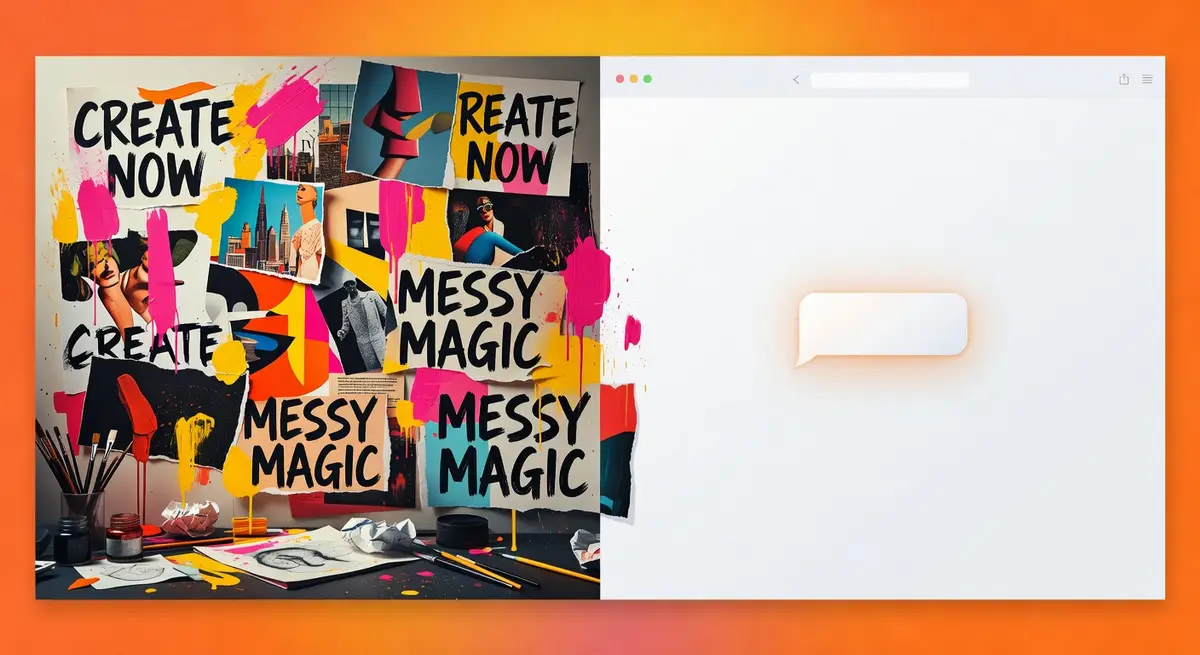
Milo's having another one of those conversations. The junior designer sits in the corner of the agency, headphones on, whispering to his computer like he's confessing sins to a digital priest. "I need this logo to feel more premium. Bring in some gold tones, but keep it minimal. Make it work across social, print, and web." The screen flickers. Photoshop opens. Illustrator follows. Files sync. Colors shift. Formats multiply.
He's talking to Adobe's Firefly AI Assistant.
Advertisement

The Conversational Creative Class
Four weeks into the public beta, Firefly AI Assistant has redefined what it means to be a creative professional. Gone are the days of jumping between Photoshop, Premiere, and Illustrator like some demented digital gymnast. Now you just talk.
"Tell us the destination and let the Firefly assistant bring the tools to you," Alexandru Costin, Adobe's VP of AI & Innovation, told VentureBeat in April. But what happens when the destination becomes the only skill that matters?
The assistant draws from 60+ pro-grade tools across Adobe's Creative Cloud. It orchestrates multi-step workflows with the precision of a Swiss watchmaker and the speed of a caffeine-addicted intern. "You describe what you want to create in your own words," Adobe promises, "and the assistant brings it to life."
Sounds beautiful. Until you realise what we've actually built.
The Great Flattening
At Pentagram, they're calling it "the great flattening." Not the visual trend: the intellectual one. When every creative decision can be articulated in natural language and executed by an agent, the craft knowledge that separated seniors from juniors begins to evaporate.
"I spent fifteen years learning how layer masks interact with blend modes," one Pentagram designer confided, requesting anonymity. "Now the 22-year-old next to me gets the same result by typing 'make this feel dreamier.' Where's my value proposition?"
The numbers don't lie. Early data from the Gallup Panel workforce studies suggests artists exposed to AI aren't seeing wage declines yet. But that study focused on individual tools, not agentic orchestration.
Firefly AI Assistant represents something different. This isn't about generating images or extending videos. It's about removing the technical barriers that once defined expertise. When the assistant can automatically scale logos for Instagram, match lighting across product shots, and sync audio to video cuts, what separates the art school graduate from the TikTok creator?
Learning to Speak Machine
The real skill now? Prompt craft. Not the twee "ChatGPT hacks for creatives" nonsense flooding LinkedIn. I mean the ability to translate abstract creative vision into executable instructions for a machine that thinks in functions and parameters.
"Generate smart crops and variations, optimising layouts and aspect ratios for Instagram, TikTok, Snapchat and Facebook, while preserving composition." That's not a prompt. That's a creative brief written in robot.
Creatives are becoming creative directors by default. But not in the way they imagined.
The Junior Question Nobody Wants to Answer
Here's what keeps me awake: if Firefly AI Assistant can orchestrate professional workflows across 30+ creative AI models, what's the career path for junior talent? How do you learn the craft when the craft is increasingly invisible?
The old apprenticeship model assumes technical skill acquisition. Junior learns tools, graduates to concepts, eventually becomes senior. When the assistant handles Auto Tone, Generative Fill, Remove Background, and Vectorise operations, where does the junior designer develop their eye?
"You are the creator," Deepa Subramaniam, Adobe's VP of Product Marketing, insists. "You have creative ideas. We want to give you tools and workflows that give you time back to be more creative."
But creativity isn't just about ideas. It's about developing taste through making, through the ten thousand hours of adjusting curves and fighting with fonts. When the assistant does the making, how do we develop the taste?
The Control Plane Strategy
Adobe's playing a deeper game. By positioning Firefly as "the creative AI control plane," they're not just selling tools; they're selling the infrastructure of creative work itself. The assistant integrates with Google's Nano Banana, Runway's Gen-4.5, ElevenLabs' Multilingual v2. Soon it'll work with Anthropic's Claude.
It's Slack for creativity. The universal interface through which all creative AI flows.
Brilliant strategy. Terrifying implications.
When Efficiency Becomes Identity
The promise is seductive: "describe what you want and shape it as it comes together." No more hunting through menus. No more wrestling with incompatible file formats. Just pure creative intention, executed flawlessly.
But when efficiency becomes the primary value, what happens to the happy accidents? The discoveries that come from struggling with limitations? The creative breakthroughs that emerge from technical constraints?
Paul Rand didn't design the IBM logo despite his tools. He designed it because of them.
The question Adobe won't ask at their next summit: if the assistant can orchestrate any creative outcome, who's orchestrating the assistant? And when everyone can be a creative director, does anyone really create?