UK's AI Data Centre Boom Puts Gas Back on the Grid - and Net Zero on the Line
Four planned hyperscale data centres are weighing on-site gas generation as grid queues stretch toward a decade, exposing a structural collision between the UK's AI industrial ambitions and its Clean Power 2030 target. The government's own consultation on AI for clean energy closes today.
The timing is almost too neat. Today is the final day for responses to the Department for Energy Security and Net Zero's (DESNZ) call for evidence on its Vision for an AI-Enabled Clean Energy System: a document that opened in September asking industry how artificial intelligence could make Britain's grid cheaper, smarter and greener. While Whitehall was gathering optimistic responses, the BBC's File on 4 programme was mapping a rather different reality on the ground.
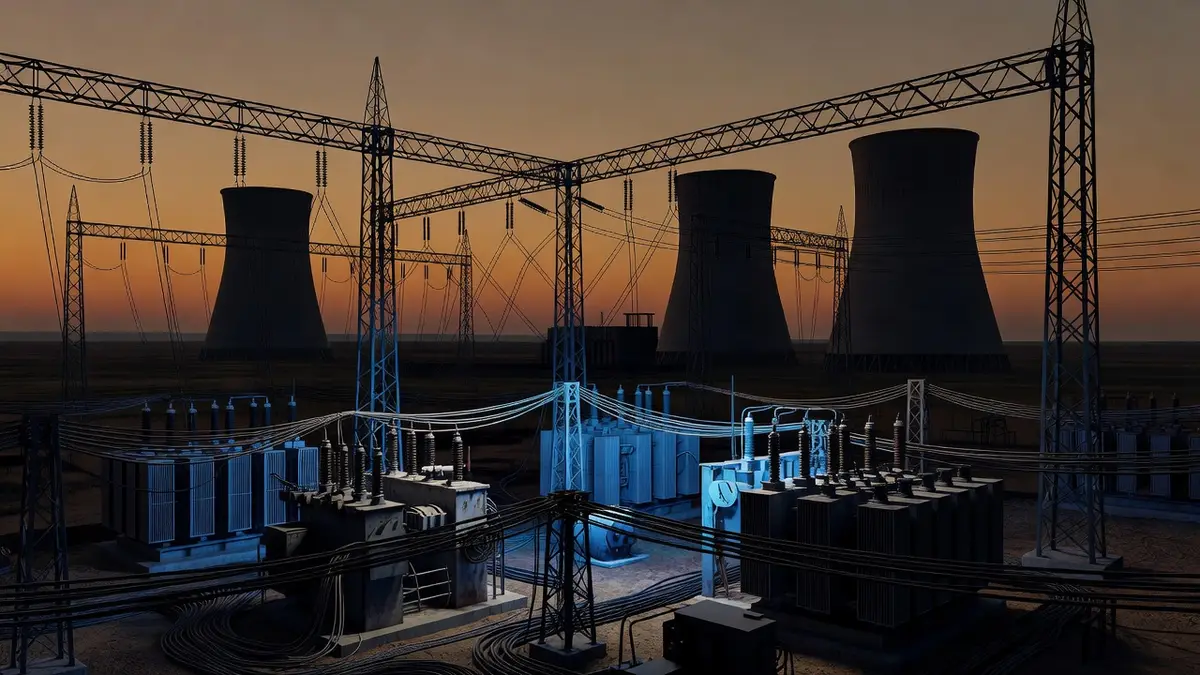
Four planned hyperscale data centres are already considering on-site gas-fired power stations to meet their electricity needs, the investigation found, published on 3 November. Together, those four projects could require around 1.3 gigawatts of capacity and generate an estimated 4.1 million tonnes of carbon emissions per year if operated at full load. That is roughly the annual output of a mid-sized coal plant, the type of infrastructure Britain closed for good less than two years ago.
Advertisement

The Queue That Swallows Ambitions
Ofgem, the energy market regulator, has confirmed that data centre developers are collectively seeking grid connections totalling 72 gigawatts. Peak electricity demand across the entire UK last year stood at 45 gigawatts. The queue is already larger than the country's maximum draw. Some developers have been told to expect waits of up to ten years for the grid infrastructure upgrades they need.
In Buckinghamshire, at a site called Wapsey's Wood next to the M40, a proposed 200-megawatt gas power station could operate until sufficient grid capacity is available, currently not expected until 2040. In Cardiff, a separate developer is seeking permission for a temporary turbine centre of up to 49.9 megawatts for as long as five years. Acre Slough, west of London, could use gas engines capped at 49.5 megawatts while it waits for a connection. All four projects say they intend to connect to the national grid eventually.
Ofgem's Nathan McWhinnie did not sugarcoat it: "In many places the electricity grid is being maxed out. These projects can be as large as cities."
The Chancellor's Crack in the Dam
Last week's Budget introduced a British Data Centre Covenant, requiring operators to invest in local communities and protect water supplies in exchange for priority grid connections. The covenant is real policy. But the same Budget speech also confirmed that where grid connections are unavailable, developers would be permitted to generate their own power on-site. That single sentence is now doing substantial structural work.
The Environmental Audit Committee chair, Toby Perkins MP, called the prospect of large-scale gas adoption for data centres "not acceptable". The National Energy System Operator has warned that the gas buildout could complicate the Clean Power 2030 target, which envisaged less than 5% of unabated gas in the electricity mix. Data centres already account for approximately 2.5% of UK electricity consumption; unchecked growth could push that figure toward 10–15%.
The direction of capital is clear. This week, Drax and Brookfield announced plans to develop data centre capacity of more than one gigawatt at Drax's biomass site in North Yorkshire, backed by Qatari investors, with operations potentially beginning by early 2028. The plant's existing grid connection is the asset being monetised; biomass generation would eventually power the AI workloads, though initially the electricity comes from the broader grid.
Industry Knows What It Needs
Energy UK published its own report, Smarter Thinking: Harnessing AI for a Cleaner, Fairer Energy System, on 2 November. The industry body, whose members include Centrica, EDF, E.ON, Equinor, GE Vernova, National Grid, Octopus Energy and ScottishPower, is unambiguous: AI is already transforming generation management, wholesale market forecasting and predictive maintenance. EDF, working with Mesh-AI, reduced the validation time of energy trades from 150 minutes to under 30 minutes. These are real gains.
The report is equally clear about the barriers. Data fragmentation, trust deficits between operators and AI vendors, and regulatory uncertainty are slowing deployment of AI tools that could actually ease grid pressure. The jump from trial to normal operations, as the report notes, remains genuinely difficult for the UK energy sector.
The irony is structural. AI is simultaneously the technology that could make the grid smarter and the demand surge that is breaking it. The industrial economy sits in the middle: manufacturers already squeezed by some of the highest energy costs in Western Europe now face a grid that must absorb data centre loads of city-scale before it can serve the factories, logistics sheds and cold stores that actually make physical goods.
The Trademark Signal
One way to read the direction of commercial confidence is through IP filing data. According to AI Business Dispatch analysis of IPO (TMD) data, Class 4 trademark filings, the Nice class covering industrial fuels, lubricants and energy products, totalled just 165 in Q4 2026, a 66% decline on the prior period. That is a sharp contraction. It may reflect consolidation, delayed brand launches, or capital being redeployed toward compute infrastructure rather than physical energy products. Whatever the cause, it is a cooling signal in a sector simultaneously being asked to carry a great deal of national ambition.
The DESNZ consultation closes today. The industry's answer, it turns out, is already written in planning applications for gas turbines in Buckinghamshire and Cardiff. Policy that does not close the grid gap faster will get that answer more often.