The Creative Director's Last Stand
Adobe just made every junior designer obsolete—or did it crown them all creative directors?
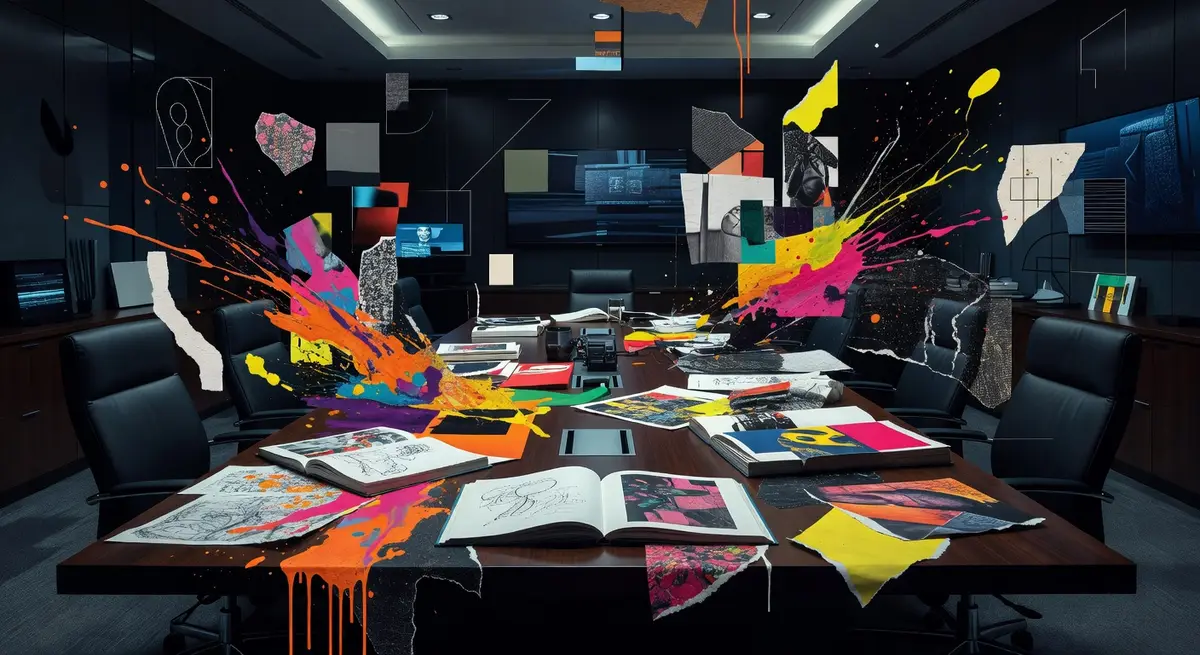
She's sitting in the break room at 3 PM, clutching her third coffee. Maya graduated from her design program eight months ago. Still no job. Her classmates scatter across a grim landscape—retail, ride-sharing, anything that pays. Adobe's executives are on stage talking about their "new era of agentic creativity."
The Great Adobe AI Coup
On April 15, Adobe dropped Firefly AI Assistant like a bomb on the creative industry. Not just another AI tool—a conversational interface that orchestrates workflows across Photoshop, Premiere, Illustrator, Lightroom, the whole Creative Cloud empire. You describe what you want. It does the work. "Creativity without borders," they're calling it.
Advertisement

"Adobe is leading the shift into a new era of agentic creativity, where you direct how your work takes shape and your perspective, voice and taste become the most powerful creative instruments of all," said David Wadhwani, Adobe's creativity czar.
Translation: We're turning everyone into creative directors. Who needs the junior talent?
The Skills Are Dead, Long Live the Skills
The announcement came with all the usual PR poetry about "Creative Skills"—pre-built workflows you can trigger with a single prompt. Social media assets, portrait retouching, colour grading across platforms. Everything a junior designer spent years learning to do manually, now executable by typing a sentence.
But here's what Adobe isn't saying: Firefly AI Assistant is Project Moonlight rebranded. They've been testing this in private beta since October. Some testers have been quietly integrating it into their workflows for months.
"We want creators to tell us the destination and let the Firefly assistant—with its deep understanding of all the Adobe professional tools and generative tools—bring the tools to you right in the conversation," Alexandru Costin, Adobe's VP of AI, told TechCrunch.
Exactly. No more learning Photoshop's 47 different blend modes or Premiere's colour wheels.
The Junior Designer Question Nobody Wants to Answer
Here's the uncomfortable truth ricocheting through design studios: If you can describe what you want and the AI orchestrates it across every Adobe app, what's left for the person who just learned keyboard shortcuts?
The job postings tell the story. "Mandatory mastery of AI prompting techniques and leading AI visual creation tools (e.g., Midjourney, Stable Diffusion, DALL-E 2/3, Adobe Firefly)," reads one posting for an AI Creative Designer position. "Traditional design software" gets mentioned after "prompt engineering."
"Experience with tools such as Midjourney, Firefly, Runway, Nano Banana, or similar is strongly preferred," another listing demands. The writing's on the wall, generated by AI, optimised for performance.
One recent graduate shared her story anonymously: "My classmates and I, as well as students from the class just ahead of us, are certainly struggling to find work." She graduated in June from a two-year intensive programme. The timing couldn't be worse.
The Creative Director Fantasy
Adobe's betting everything on this narrative: AI doesn't replace creativity, it elevates everyone to creative director status. You become the visionary. The AI becomes your production team.
"At its best, agentic technology expands creativity," Adobe's blog post argues. "It lets people bring their vision to life simply by explaining it. Instead of navigating menus and tools, you create at the speed of your imagination."
But also: "At its worst, agentic creation produces uniformity and AI slop, taking both the human and the humanity out of the creative process."
Even Adobe admits the dark side.
The Pressure Cooker Context
This isn't happening in a vacuum. Adobe CEO Shantanu Narayen announced his departure in March, after 18 years running the show. Wall Street wasn't impressed with Adobe's AI monetisation timeline. Shares dropped 23% year-to-date through March, part of what investors dubbed the "SaaSpocalypse"—fears that agentic AI could undermine traditional per-seat software pricing.
Firefly AI Assistant is Adobe's Hail Mary. A way to say: Look, we're not being disrupted by AI. We ARE the disruption.
What This Means for Tomorrow's Creative Workforce
So Maya sits in that break room, wondering if she wasted two years learning typography and colour theory. But maybe she's asking the wrong question.
Maybe the question isn't whether junior designers will exist. Maybe it's whether the title "junior" has any meaning when everyone's got access to senior-level AI execution.
"For creative professionals, it unlocks the ability to direct more complex, multi-step workflows, combining speed with the control and precision required for high-quality creative work," Adobe promises.
The optimistic read: Every creative becomes more powerful. The cynical read: Only the most strategic, most conceptually sophisticated creatives survive.
The Question Adobe Won't Answer
Here's what no one's saying at Adobe Summit or in the press releases: If your AI assistant can learn individual preferences, execute complex workflows, and maintain context across sessions—if it can do everything except have taste and vision—how many humans do we actually need in this process?
Firefly AI Assistant launches in public beta "in the coming weeks." Maya and her classmates will find out soon enough whether they're the last generation of junior designers, or the first generation of AI-assisted creative directors.