Siemens Brings Physics-Level Digital Twins to UK Factory Floors - But Who Has the Skills to Run Them?
Siemens unveiled its AI-powered Digital Twin Composer for UK and Ireland manufacturers at Transform 2026 in Manchester this month. The technology promises to cut costly physical mistakes before they happen - if British industry can find the people to use it.
Virtual Factories, Very Real Skills Gap
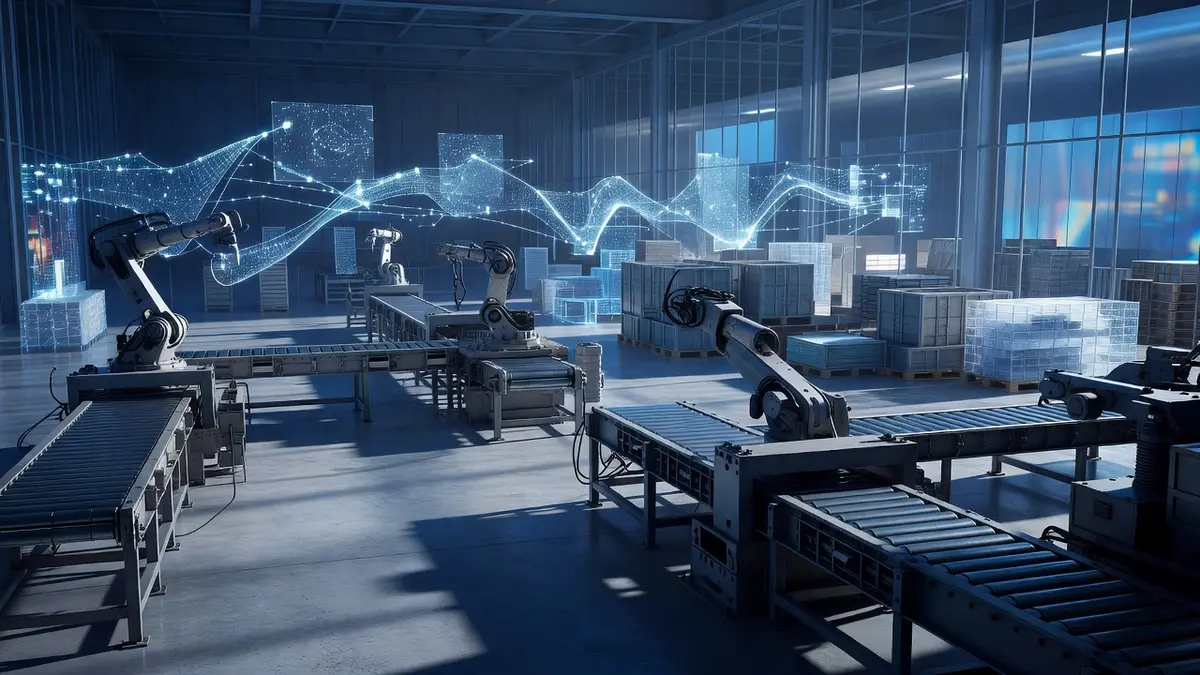
Siemens chose Manchester Central on 15–16 July to put its most ambitious industrial AI product in front of UK manufacturers. The Digital Twin Composer, part of the Siemens Xcelerator portfolio and built on NVIDIA Omniverse libraries, lets factories run physics-accurate simulations of entire production lines before a single piece of steel is moved. Real-time operational data feeds straight into the model, keeping the virtual world and the physical one in sync.
The timing was deliberate. Siemens Transform 2026 is a biennial event, and this edition arrived with more urgency than most. Brian Holliday, CEO of Siemens UK and Ireland, demonstrated the platform alongside NVIDIA's UK regional director, Anthony Hills, showing how the combination of digital twins, live sensor data and physical AI can support faster, lower-risk decision-making on the shop floor.
Advertisement

The headline use cases are prosaic in the best way: validating a conveyor redesign before committing capital, testing a production line tweak to reduce energy draw, stress-testing a warehouse layout without halting operations. That last point matters. Early results from PepsiCo's US deployments, the reference customer Siemens keeps returning to, showed the system identifying up to 90% of potential issues before any physical modifications were made, a 20% increase in throughput on initial deployment, and capital expenditure reductions of 10–15% by uncovering hidden capacity.
"It fundamentally reduces software engineering effort, a former barrier to digital twin adoption," Holliday said at the event. Siemens has been selling digital twins for years; the argument now is that the software complexity barrier has been broken.
The Adoption Arithmetic Doesn't Add Up
Here's the structural problem. Siemens is selling a sophisticated industrial AI platform into a market where, according to Make UK's June 2026 report AI, Skills and the Future of the UK Manufacturing Sector, only 2% of manufacturers say AI is widely embedded across their operations. Fewer than 40% are using it in any department at all. The most common AI application in UK factories? HR and administration: 83% of manufacturers using AI deploy it in back-office functions. Usage in production sits at just 11%; in supply chain and logistics, 7%.
Make UK puts the cost of inaction at roughly £6bn in lost output annually, driven by unfilled vacancies and digital capability gaps. Wider digitalisation, the organisation argues, could unlock a £150bn boost to UK GDP by 2035.
The skills shortage is not abstract. Over half of manufacturers cite it as the primary barrier to AI adoption. The Make UK report calls for nationally recognised AI skills standards for manufacturing roles and flexible, shift-friendly training that works inside factory environments rather than classroom settings designed for office workers.
The Formation Signal Worth Watching
Business formation data adds a sharper edge to this picture. According to AI Business Dispatch analysis of Companies House data, only 51 new SIC 10.71 companies (bread and fresh bakery goods manufacturing) were registered in 2026-Q3, an 82.2% collapse versus the prior period. That is one proximate measure of entrepreneurial confidence in a sector that still runs largely on physical labour and tight margins: precisely the kind of operation that digital twin technology is supposed to help, but rarely reaches first.
The IPO trademark data is equally telling. Class 39 transport and logistics filings fell to 356 in 2026-Q3, down 71% on the prior period, per AI Business Dispatch analysis of IPO (TMD) data. Among the roughly 2,900-odd active SIC 10.71 manufacturers in the UK, 97.3% hold no Class 39 trademark at all. The bread-and-bakery manufacturing base, a useful proxy for the wider food manufacturing long-tail, is not investing in logistics brand infrastructure. These are not the companies currently in the queue for Digital Twin Composer licences.
That is the core tension Siemens faces in the UK. The technology showcased in Manchester is already proven at PepsiCo scale. Holliday's stated ambition at Transform 2026 is to "underpin the transformation of UK industry." But transformation requires a pipeline of organisations ready to absorb it, and the formation and trademark data suggest the physical economy's smaller players are in a consolidation or retrenchment phase, not an expansion one.
What Comes Next
Siemens has form here. The partnership with NVIDIA, announced at CES in January and now landing on UK soil, is structured around building what both companies call an Industrial AI Operating System, covering design, engineering, manufacturing, operations and supply chains end-to-end. Nine AI-powered copilots are being deployed across Siemens' software portfolio, from product lifecycle management to manufacturing execution systems.
The question British industry needs to answer is less about the software and more about organisational readiness to use it. Rockwell Automation's UK managing director put it plainly in Manufacturing Management earlier this year: "The challenge is no longer access to technology, but the ability to embed it into production environments." Siemens would not disagree. Embedding technology into production environments takes people, and right now, the people are the bottleneck.
The brownfield retrofit wave in UK warehousing is real. Constrained land, rising wages and recruitment difficulties are pushing operators to automate existing sites rather than build new ones. That structural pressure is exactly the demand signal Siemens is targeting. Whether the Digital Twin Composer becomes a mass-market tool for UK industry or remains a premium product for the largest tier-one manufacturers will depend less on the technology than on whether Make UK's skills agenda gets any traction in the next 18 months.