Siemens Brings Physics-Grade AI Simulation to UK Factory Floors - but Skills Gaps Threaten the Payoff
Siemens unveiled its Digital Twin Composer platform to UK and Irish manufacturers at Transform 2026 in Manchester, promising virtual factory simulation at industrial scale. The timing is pointed: a Make UK report published weeks earlier found only 2% of manufacturers have AI widely embedded across their operations.
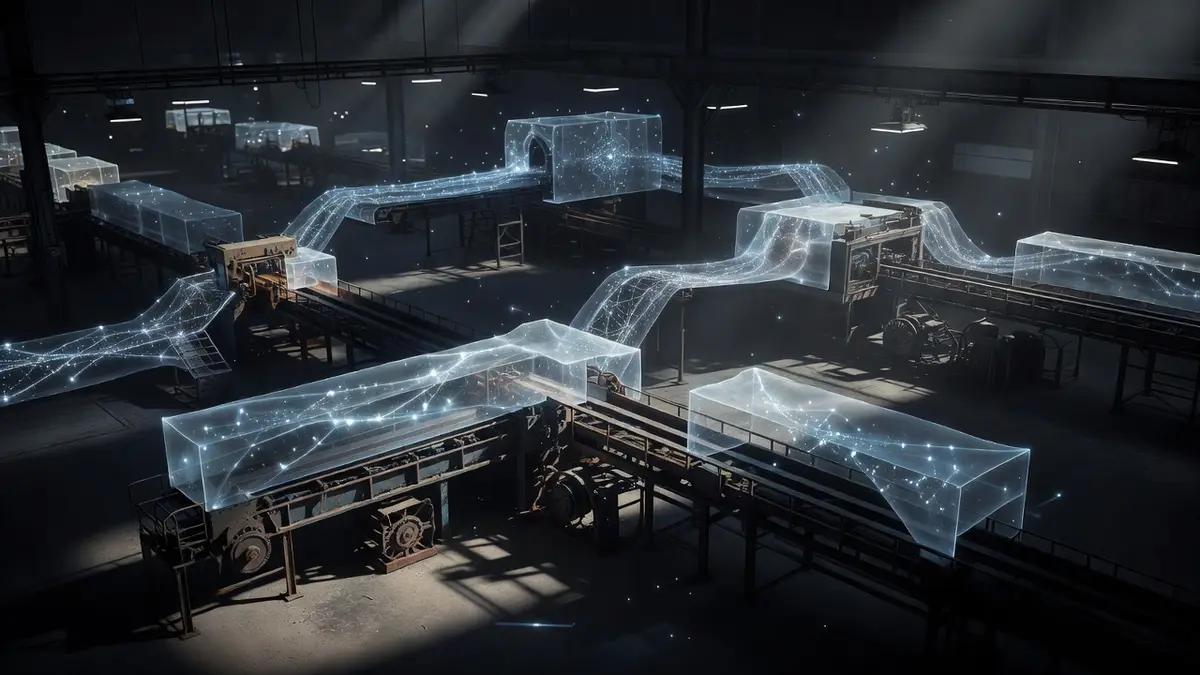
A Virtual Factory Before the First Brick
Siemens arrived at Manchester Central on 15 and 16 July with a product claim that would have seemed fanciful a decade ago: simulate an entire production line, supply chain and factory floor in a photorealistic 3D environment before committing a penny of capital expenditure.
The vehicle is Digital Twin Composer, part of the Siemens Xcelerator portfolio and built on NVIDIA Omniverse libraries. Siemens demonstrated the tool alongside NVIDIA's UK and Ireland regional director at Transform 2026, its biennial industrial showcase. The pitch is direct enough: combine 2D and 3D engineering data with real-time operational feeds from MES systems, PLCs and IIoT sensors, then run the whole thing through physics-accurate simulation before anything moves in the physical world.
Advertisement

The US deployment at PepsiCo provides the only hard numbers currently in the public domain. PepsiCo converted selected manufacturing and warehouse facilities into high-fidelity 3D digital twins simulating end-to-end plant operations, identifying up to 90% of potential issues before physical modifications occurred, with a reported 20% increase in throughput on initial deployment. Siemens says UK industry is next.
What Digital Twin Composer Actually Does
Digital Twin Composer connects Siemens' digital twin with real-time physical data sources in a managed visual scene. The software engineering effort, historically the chief reason digital twin projects stalled on the workshop floor, is reduced by using NVIDIA Omniverse as the rendering backbone. Companies can, in principle, walk a virtual production line, test a capacity change, or stress-test a new supplier configuration without disrupting a live shift.
Siemens Transform 2026 brought together manufacturers, infrastructure operators and industrial technology leaders to explore how digitalisation, automation and AI are reshaping how products and industrial systems are designed, built and operated. Digital Twin Composer was the centrepiece announcement for the UK and Ireland market.
The platform also sits inside a broader Siemens-NVIDIA Industrial AI Operating System ambition, announced at CES in January, which aims to reinvent the end-to-end industrial value chain through AI, from design and engineering through to manufacturing, operations and supply chains.
The Inconvenient Context
Here is the problem. Siemens is selling a sophisticated industrial AI platform to a sector that, by its own trade body's reckoning, has barely started using AI at all.
Make UK's report published in June, AI, Skills and the Future of the UK Manufacturing Sector, found only 2% of manufacturers say AI is widely embedded across their operations. Fewer than 40% are using it in any department. Nearly one in five have not adopted AI at all. Where it does appear, it sits in back-office functions: 83% of manufacturers using AI deploy it in HR, finance or administration. Only 11% use it in production, 7% in supply chain and logistics, and 6% in quality control, the exact operational domains where Digital Twin Composer is designed to land.
Over half of manufacturers cite skills shortages as the primary barrier. Make UK estimates the sector loses around £6bn in output annually due to unfilled vacancies and digital capability gaps. Wider digitalisation could, the body argues, unlock a £150bn boost to UK GDP by 2035, but the report warns that most firms lack the organisational readiness to move from small-scale AI trials to full business transformation.
The UK is, per Rockwell Automation's own research published in May, entering what one industry figure called "a more disciplined phase of digital transformation" where success is defined by execution rather than technology adoption alone. Siemens' product is exactly the sort of execution tool that phrase implies. Whether the workforce is ready to run it is another matter.
A Registration Drought in the Bakery Sector
The structural gap shows up cleanly in AIBD's own company formation and trademark data. Bakery and flour-product manufacturing (SIC 10.71), a sector that relies heavily on process optimisation and line efficiency, recorded just 48 new company registrations in 2026 Q3, an 83.2% collapse against the prior period, according to AIBD analysis of Companies House data as of July 2026.
Trademark activity tells a similar story. UK Class 12 filings (vehicles and transport machinery) fell to 285 in 2026 Q3, down 68.9% on the prior period, per AIBD analysis of IPO data as of July 2026. And 97.4% of active SIC 10.71 companies hold no Class 12 trademark at all, a proxy for how few food-processing businesses are seriously investing in the kind of autonomous or vehicle-integrated equipment that digital twin simulation would underpin.
Business formation and brand-registration rates are crude instruments, but they point consistently in one direction: UK manufacturing's smaller operators are not yet building the asset base that industrial AI platforms are designed to optimise.
The Adoption Gap Is Structural, Not Attitudinal
Siemens' UK and Ireland CEO has spoken publicly about the platform's potential to "underpin the transformation of UK industry" and reduce the software engineering effort that was a former barrier to digital twin adoption. That last point matters. The complexity argument against industrial AI has been largely answered at the platform level.
What remains is the human capital constraint. Nationally recognised AI skills standards for manufacturing roles do not yet exist in any coherent form. Training provision is not designed around shift patterns or factory floor realities. SMEs, which make up the majority of the UK's 70,000-plus manufacturing businesses, have no clear route from experimentation to full deployment.
Siemens has built the machine. It works, and PepsiCo's numbers suggest it works well. Getting British manufacturers to use it at scale is a different problem entirely, and one that no amount of photorealistic simulation can solve.