Two Days Left: HMRC's Free Filing Portal Dies on Monday
The Company Accounts and Tax Online service shutters forever on 31 March 2026
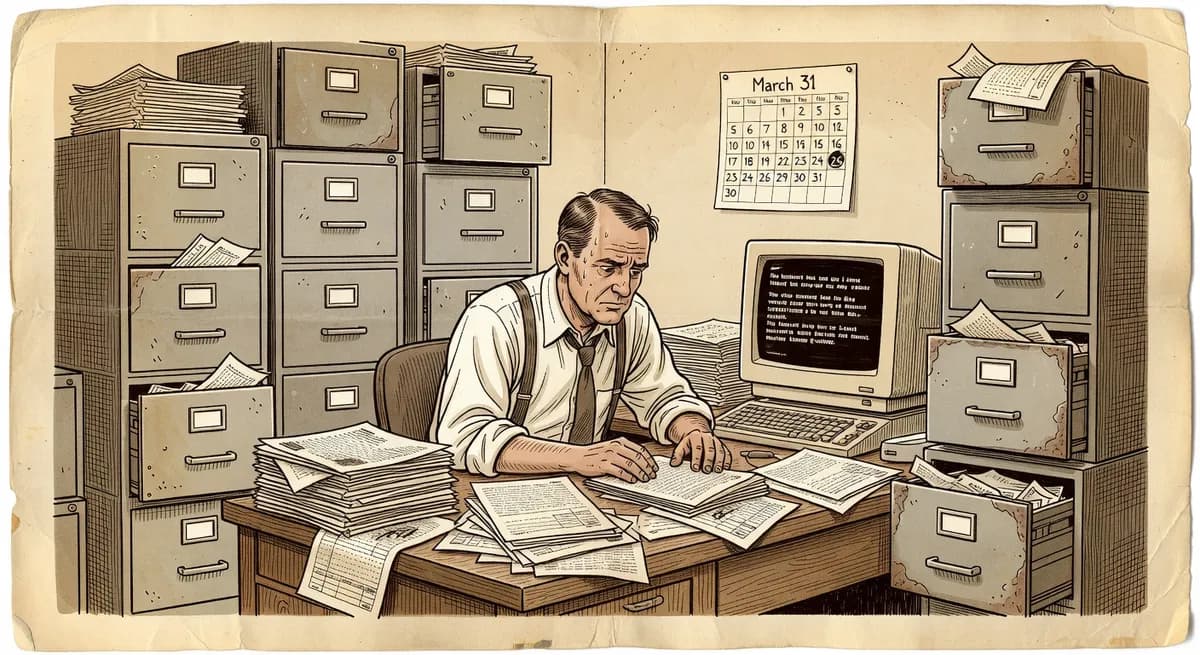
Monday, 31 March 2026.
That's when HMRC and Companies House pull the plug on their free joint filing service forever. Not delayed. Not extended. Gone.
If you've been using the Company Accounts and Tax Online (CATO) portal to file your CT600 and accounts together, you have precisely two working days to download your records and find alternative arrangements. After midnight on Monday, the service vanishes—and takes your filing history with it.
Advertisement

What Dies on Monday
The free service that's existed since 2011 allowed small companies to file Corporation Tax returns and statutory accounts in one submission. Straightforward enough for director-managers of micro-entities who couldn't justify accountant fees for basic compliance.
From Tuesday, all companies must use commercial software to file CT600s with HMRC. No exceptions. No free alternative. The government has exited the corporation tax software business entirely.
Companies House accounts can still be filed via WebFiling or paper for now, though that's changing too. The agency plans software-only filing from April 2027, assuming political support holds.
Your Monday Morning Workflow
Before the lights go out:
-
Download everything immediately. HMRC recommends saving at least three years of filed returns. After Monday, these records disappear forever. No retrieval service. No exceptions.
-
Extract your filing history. Go to "Track your submissions," select each filing period, click "Save your return in HTML." Do this for every return you might conceivably need again.
-
Back up submission receipts. Store securely. You'll need these if HMRC queries past filings or compliance checks emerge.
Can't access the service on Monday morning? Too late. Should have started Friday.
The Software Scramble
Commercial filing software costs vary wildly. Some micro-entity solutions start around £20-40 annually. Traditional accountant-grade software runs £100-200 plus. A few providers offer genuinely free tiers for basic micro-company returns.
HMRC maintains an approved software list, but won't vouch for accuracy or reliability. Your risk entirely.
Most accounting software already includes iXBRL capability for properly tagged accounts. Essential, since that requirement isn't changing. But integration quality varies, and switching mid-year creates its own complications.
The Casualties
This particularly hammers community groups, micro-consultancies, and dormant companies that previously relied on free filing. Some are weighing closure rather than absorbing software costs that exceed their administrative budgets.
The government's position: modern commercial software offers superior functionality and error checking. The reality: it's another "ticket to trade" cost for the smallest entities, justified by wider digitization requirements under the Economic Crime and Corporate Transparency Act.
Community interest companies face double jeopardy. All CICs need commercial software for Corporation Tax from Tuesday, with no free alternatives. And paper filing for CIC34 reports ends in April 2027 as part of the broader software-only push.
Historical Perspective
When CATO launched in 2011, it solved a genuine problem: how to let small companies meet dual filing obligations without expensive professional software or agent fees. Fifteen years on, that same simplicity is deemed incompatible with enhanced data validation requirements and legislative changes.
It's reminiscent of VAT's quarterly return abolition in 2010, or the switch from paper P35 forms. Compliance modernizes whether businesses are ready or not. The question isn't whether change is necessary, but who bears the transition costs.
Next Compliance Cliff
Mark your diaries: 1 April 2027. That's when Companies House WebFiling goes the same way as CATO. All accounts—including micro-entity and dormant company filings—must use commercial software with full iXBRL tagging.
Unless political pressure forces another delay. Small business groups are pushing for government-mandated free tiers or micro-entity exemptions. Ministers are "considering stakeholder feedback." We'll see.