Twenty-Six Days: The Joint Filing Extinction Event
31 March 2026 marks the end of free company filing as we know it. Are you ready for the software scramble?
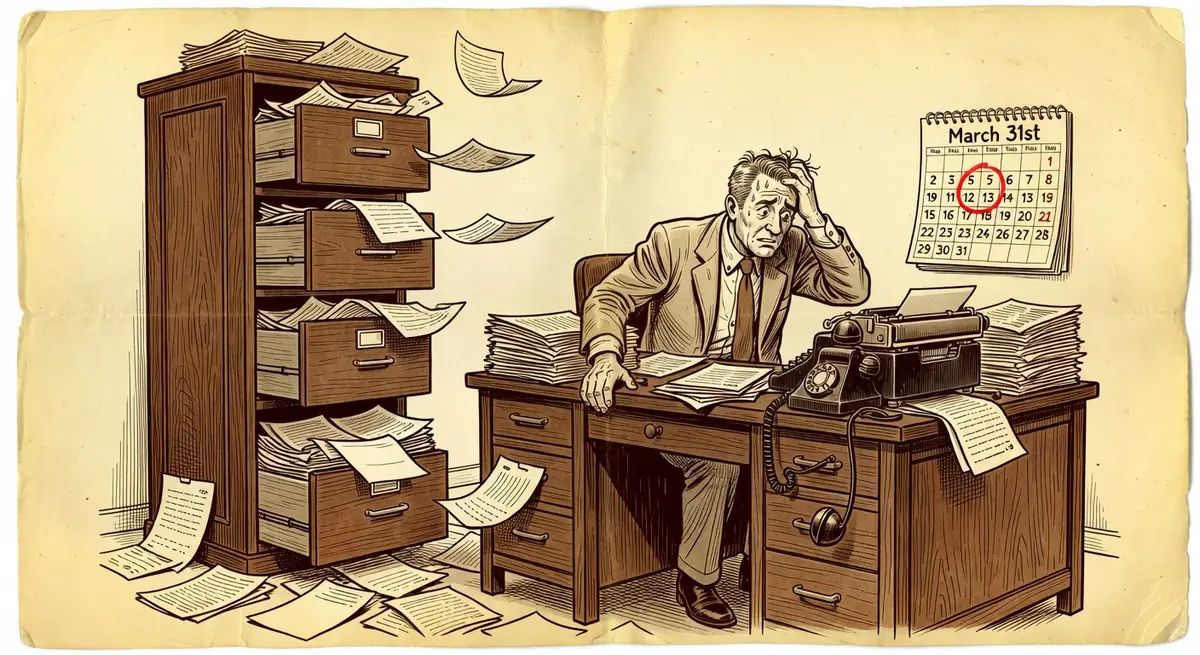
Twenty-six days.
That's what stands between your company and the end of an era. On 31 March 2026, Companies House and HMRC will permanently close their joint online filing service for company accounts and Corporation Tax returns – the so-called CATO portal that has allowed businesses to file both sets of paperwork in one fell swoop since 2011.
From 1 April 2026, if you run a company, you'll need commercial software to file your Corporation Tax return (CT600) with HMRC. There will be no free HMRC web form for companies, except in very narrow "reasonable excuse" cases where paper filing is permitted.
Advertisement

What this means for your Monday morning: If you're one of the thousands of company directors who currently log in once a year, tick some boxes, and file for free, those days are numbered. For many one-person and micro-companies that currently self-file for free, this is a real change.
The Digital Diktat
The service is closing because it's now outdated. It no longer aligns to modern digital standards, enhanced corporation tax requirements or changes to UK company law under the Economic Crime and Corporate Transparency Act. Fair enough, except this leaves the smallest companies bearing the cost of digital transformation that provides them precisely no benefit.
All companies will have to file CT600s using HMRC-recognised commercial software. For now, you can still use Companies House WebFiling or paper for accounts, but Companies House has been working towards software-only accounts filing from April 2027.
The maths is brutal. Very small or low-margin companies: Side-hustles, consultants, community interest companies and other micro-entities where a £50 to £150 yearly software fee is a noticeable hit are looking at what amounts to a new tax on incorporation.
Security Theatre, Act Two
The timing couldn't be more exquisite. Just as Companies House announces this digital modernisation drive, on Friday 13 March, Companies House was made aware of a security issue which meant that a logged-in user of their WebFiling service could potentially access and change some elements of another company's details without their consent.
The vulnerability? This access could be gained by pressing the back button four times. Four times. One might charitably describe this as suboptimal system architecture.
It has since emerged that the vulnerability dates back to October 2025, when Companies House updated its systems to integrate with the GOV.UK One login. In effect, the system may have been compromised for up to five months.
Specific data from individual companies not normally published on the Companies House register may have been visible to other logged-in WebFiling users. This includes dates of birth, residential addresses and company email addresses.
What You Must Do Now
With the clock ticking, your options are narrowing by the day.
Download your data immediately. We recommend downloading and saving at least 3 years of accounts filings for your company. You will not be able to access any previous filings on this service after 1 April 2026.
Choose your software. Lists of commercial software suppliers for corporation tax and software for filing company documents is available on gov.uk. If you already pay an accountant to handle your company accounts and tax, you're unlikely to notice much difference. Most firms already file using commercial software and will simply adjust behind the scenes.
Check your Companies House record. Given the recent security breach, it would seem very sensible for all companies to check their Companies House data and make sure it is as they expect.
Consider your future. For some people running very small activities through a company, the extra fixed cost and admin might tip the balance towards operating as a sole trader instead.
The View from Here
It's another example of "ticket to trade" costs creeping up for the very smallest entities. The irony is palpable: a government department that cannot secure its own systems against a four-click vulnerability is forcing millions of companies onto third-party software in the name of modernisation.
But the deadline is immovable. If you run a small company and currently self-file, treat 31 March 2026 as a hard deadline. Get your old records out, decide how you'll file in future and avoid a last-minute scramble that costs you more than it needs to.