The Succession Doctrine: Why Best Buy's Orchestrated Leadership Handoff Signals the End of CEO Roulette
Best Buy's methodical internal succession from Corie Barry to Jason Bonfig reveals how smart boards engineer transitions rather than merely endure them. The real strategy lesson lies not in who was chosen, but in how they were chosen.
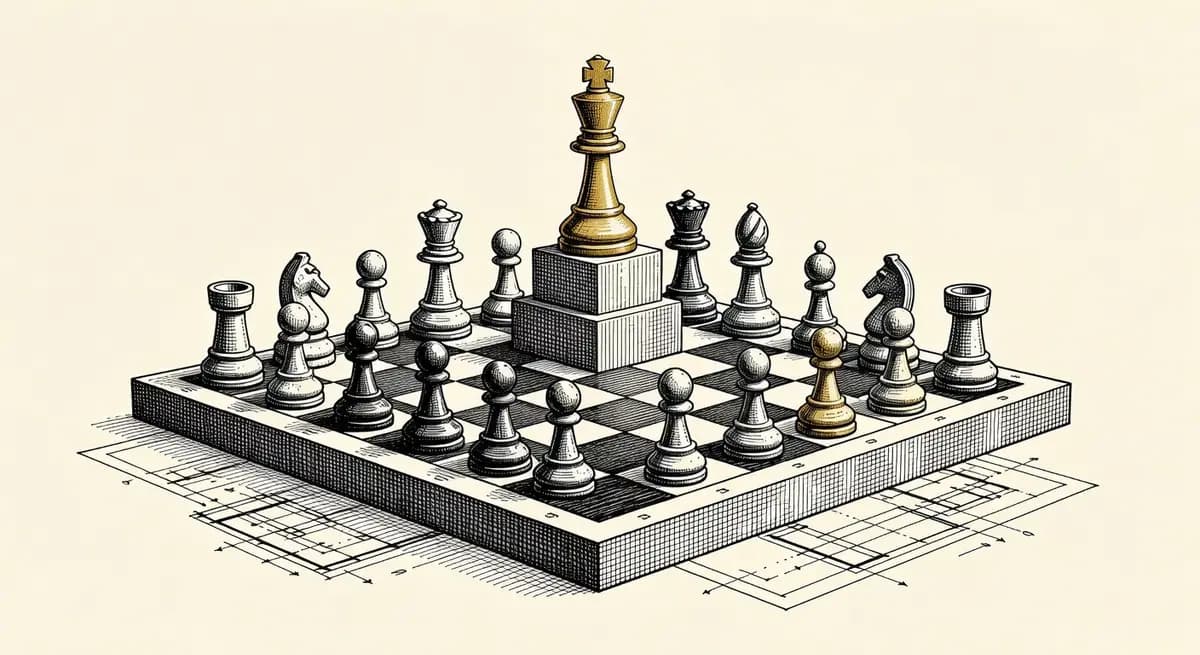
The Art of Strategic Patience
While most boardrooms play succession roulette, frantically spinning the executive recruitment wheel when their CEO announces departure, Best Buy has just demonstrated something approaching succession science. The retailer's announcement that 27-year company veteran Jason Bonfig will succeed Corie Barry in October represents far more than a changing of the guard. It reveals the anatomy of what succession planning looks like when boards treat leadership transition as a strategic capability rather than an emergency response.
Consider the choreography. Barry announces her departure in April for October. Six months of handover. Bonfig retains his operational responsibilities while absorbing CEO duties. Barry stays on as strategic advisor through April 2027. No external search drama. No leaked candidate lists. No market volatility.
Advertisement

This is succession as strategic advantage.
But here's what the press releases won't tell you: Best Buy's board has just delivered a masterclass in how to kill two succession nightmares with one carefully orchestrated appointment.
The Internal vs External Calculus
Bonfig's elevation signals Best Buy's bet that deep operational knowledge trumps external disruption. Since joining as an inventory analyst in 1999, he has accumulated what succession consultants call "institutional intelligence": the kind of organisational DNA that cannot be hired from McKinsey or poached from Amazon.
His portfolio spans merchandising, e-commerce, supply chain, marketing, and the critical Best Buy Ads network. Translation: he already runs the revenue-generating machinery that any external CEO would spend twelve months trying to understand. The board has chosen execution fluency over transformation theatre.
This matters because Best Buy sits at the intersection of three simultaneous disruptions: AI-driven device refresh cycles, the maturation of retail media networks, and the ongoing evolution of omnichannel commerce. An external hire might bring fresh perspective. An internal hire brings the operational precision to capitalise on transitions already underway.
Bonfig led the creation of Best Buy's U.S. Marketplace and scaled the Best Buy Ads business, both critical growth vectors. He didn't inherit these initiatives. He built them. The board is betting on the architect rather than hiring a new contractor.
The AI Succession Context
Barry's departure timing is strategically astute. As she told CNBC, AI represents "a three- to five-year journey" that will "change the devices we sell materially." She's handing Bonfig the controls precisely as this transformation accelerates, not after it's complete.
This reflects sophisticated succession thinking. Rather than clinging to oversee the AI transition herself, Barry recognises that the executive who will live with the consequences should drive the strategic choices. Bonfig will spend the next half-decade managing AI's impact on consumer electronics. Better that he shapes the strategy from day one rather than inheriting someone else's bets.
The compensation structure reinforces this long-term orientation. Bonfig's $10.125 million long-term incentive target starting in fiscal 2028 aligns his wealth creation with multi-year performance cycles. His success depends not on quarterly gymnastics but on sustained strategic execution.
The Broader Succession Revolution
Best Buy's approach reflects the death of traditional succession planning. The old model of emergency searches triggered by unexpected departures has been replaced by continuous leadership development programmes that treat succession as ongoing capability building.
Recent data suggests boards are finally learning. According to succession planning firms, 42% of talent management executives now cite succession strategies as their top priority for 2026, up from negligible levels five years ago. The cost of botched transitions, estimated at $1 trillion in annual S&P 1500 market value destruction, has focused minds wonderfully.
Disney's recent elevation of Josh D'Amaro over external candidates signals similar thinking. Boards are rediscovering that internal candidates bring irreplaceable advantages: cultural fluency, established relationships, and deep understanding of organisational capabilities and limitations.
The Strategic Verdict
Best Buy's succession planning reveals three critical insights about modern leadership transitions:
First, timing is strategy. Barry's voluntary departure during a period of operational strength, not crisis, allows for methodical transition rather than emergency intervention.
Second, succession planning has evolved from talent replacement to capability transfer. Bonfig isn't just becoming CEO; he's inheriting a strategic foundation he helped construct.
Third, the most successful successions optimise for execution fluency over transformation theatre. In an era of constant disruption, operational excellence often delivers more value than strategic revolution.
The market will judge Bonfig's performance over coming quarters. But Best Buy's board has already delivered a performance worth studying: they've demonstrated how succession planning becomes competitive advantage when treated as core strategic capability rather than necessary evil.
Other boards should take notes. The era of succession by serendipity is ending.