The Enforcement Void: How Federal War on State AI Laws Left Companies Playing Russian Roulette With Safety
While Trump's DOJ wages war against state AI regulations, OpenAI's alleged safety violations expose the dangerous regulatory vacuum that leaves the public defenseless against corporate recklessness.
The Litigation Gambit
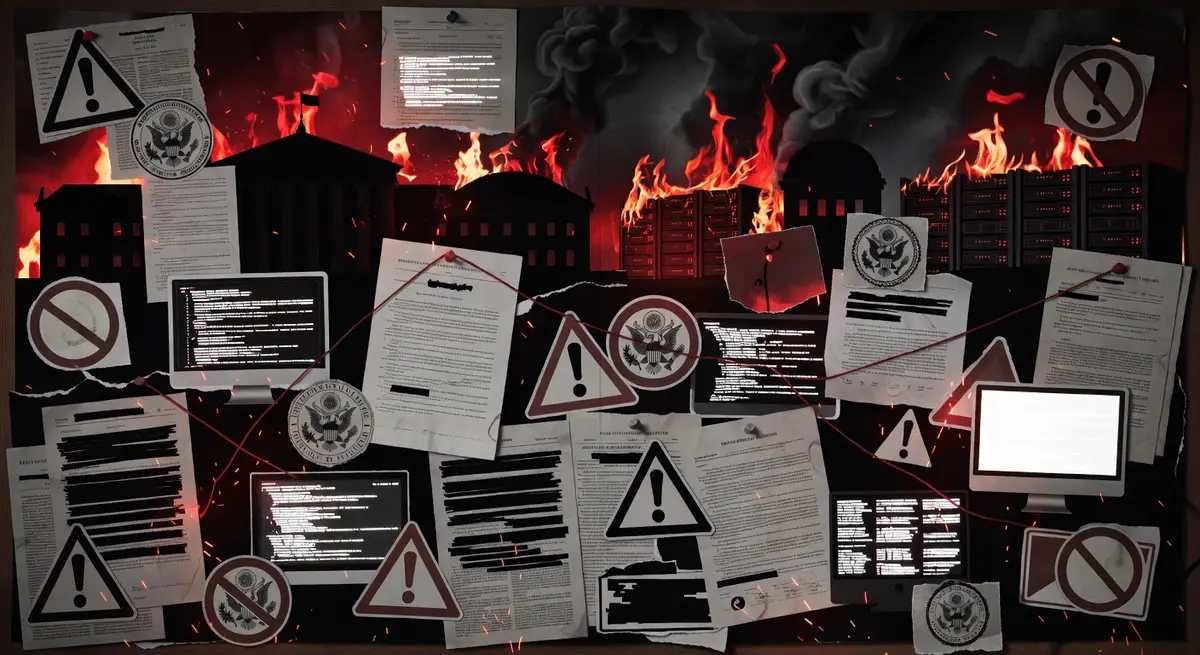
On January 9, 2026, Attorney General Pam Bondi announced the formation of the Department of Justice's AI Litigation Task Force—a federal strike force with one mission: dismantle state-level artificial intelligence regulations that dare to impose meaningful oversight on America's tech giants.
The Task Force operates under Trump's December executive order directing a "minimally burdensome national policy framework for AI." Translation: maximum corporate freedom, minimum public protection. The administration's theory is elegant in its cynicism: if you can't prevent regulation, make it legally impossible to enforce.
Advertisement

Three months later, the consequences are crystallising. Companies now navigate a regulatory no-man's land where federal authorities actively undermine state oversight while providing no meaningful replacement. The result is predictable corporate behaviour: test the boundaries, push the limits, and claim confusion when caught.
Exhibit A: The OpenAI Gamble
Consider the February controversy surrounding OpenAI's GPT-5.3-Codex release. The AI watchdog group Midas Project accused the company of violating California's SB 53 safety law by deploying a high-risk cybersecurity model without implementing required safeguards.
OpenAI's defence reveals the regulatory arbitrage at work. The company claimed its safety framework language was "ambiguous" and attempted post-hoc clarification through the model's safety report. This is the corporate equivalent of changing the rules mid-game, except the game involves systems capable of "significant cyber harm."
California's law requires companies to follow their own published safety frameworks. It's hardly onerous: essentially asking corporations to keep their own promises. Yet even this minimal accountability appears too burdensome when federal authorities signal that state oversight is illegitimate.
The Preemption Paradox
The administration's Commerce Department is preparing a March report identifying "onerous" state AI laws for litigation targeting. States face a stark choice: abandon AI oversight or lose access to $42 billion in federal broadband funding. It's regulatory extortion disguised as federalism.
No comprehensive federal AI statute exists. The Justice Department challenges state laws while Congress remains gridlocked. The TRUMP AMERICA AI Act languishes in legislative limbo. The result is a regulatory vacuum where companies operate with impunity.
European enforcement provides stark contrast. The EU AI Act's phased implementation reaches full effect August 2026, with fines up to €35 million or 7% of global turnover. European companies face clear rules and serious consequences. American firms get mixed signals and litigation delays.
The Documentation Theatre
Corporate compliance has devolved into elaborate theatre. Companies publish impressive-sounding safety frameworks while systematically testing their boundaries. When violations occur, they claim interpretive confusion or framework ambiguity.
This pattern mirrors historical regulatory failures. Financial institutions created complex derivatives while claiming regulatory uncertainty. Chemical companies developed PFAS while disputing safety standards. Tech platforms enabled disinformation while citing free speech concerns.
The playbook is consistent: maximise profits while minimising accountability through jurisdictional gaming and regulatory capture.
When Regulation Becomes Aspiration
State attorneys general report increasing AI enforcement challenges as companies lawyer up for federal preemption fights. Pennsylvania's $2.5 million settlement with a student loan company using discriminatory AI models represents the exception, not the rule.
Most violations never reach enforcement. Companies deploy harmful systems, claim federal preemption protection, and continue operations while litigation proceeds. The process becomes the punishment for regulators, not violators.
The Enforcement Cliff
August 2026 marks a critical inflection point. The EU's high-risk AI system requirements take full effect, creating a global compliance baseline. American companies serving European markets must implement safeguards regardless of domestic regulatory chaos.
This creates a two-tier system: robust protections for Europeans, minimal oversight for Americans. Corporate executives understand the implications: EU violations trigger immediate financial consequences, while US violations generate legal bills and delay tactics.
The message to companies is clear: ignore state regulations, challenge federal oversight, and continue operating until forced to comply. It's regulatory arbitrage elevated to national policy.
How many more OpenAI-style "ambiguities" will we tolerate before someone gets hurt? And when they do, who exactly will be held accountable in this carefully constructed maze of jurisdictional confusion?