The AI Oversight Gap: Why Directors Are Failing Their Most Critical Test
While boards obsess over succession planning and M&A metrics, they are sleepwalking through the governance challenge that will define corporate value creation for the next decade. The numbers are damning.
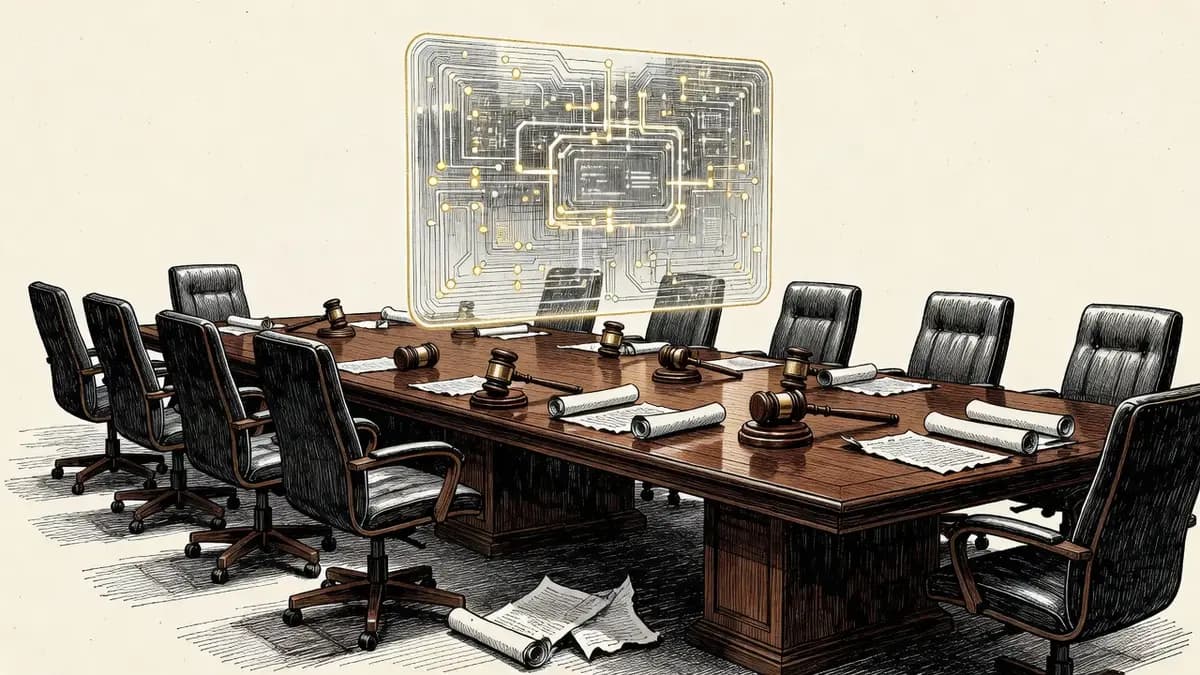
The Uncomfortable Truth
Picture this: nearly three-quarters of corporate boards possess only "moderate or limited AI expertise," according to KPMG's latest survey. Meanwhile, with new AI capabilities launching daily, with more complex regulation, boards are increasingly expected to demonstrate informed oversight of how AI is procured, deployed, and monitored. The mathematics are stark. The accountability is absolute.
Let me translate what this means in the unforgiving language of fiduciary duty: directors are being asked to govern technologies they do not understand, in markets they cannot predict, under regulations that do not yet exist. It is like asking a Victorian railway board to oversee a space programme.
Advertisement

The Succession Planning Smoke Screen
While boards have been consumed with CEO succession planning, today's corporate boards are confronting a period of unprecedented leadership churn, systemic risk, and technological disruption, they have systematically ignored the governance challenge that will determine whether their next CEO has anything meaningful to lead.
Almost 50% say AI is not yet on the board agenda, reveals Deloitte's survey of nearly 500 board members across 57 countries. This is not mere oversight. It is strategic malpractice.
The irony is exquisite. Nine of 10 CEOs say they'd like to replace one or more directors, according to PwC's Board Effectiveness Survey. Perhaps they should start with those who think artificial intelligence is someone else's problem.
The New Governance Arithmetic
Here is what changed while boards were debating committee structures: 35% of board members say their boards have already integrated AI (including generative AI) into their oversight activities. The early adopters are not merely experimenting; they are building competitive moats.
But the laggards face a reckoning. AI is now a known risk and increasingly will be a source of liability, discrimination, and harm if not monitored. Established ESG programs are a natural home for AI governance and mitigation of the known and increasing risks just as corporate boards will be increasingly accountable for the legal compliance and safety of AI systems.
Consider the legal exposure alone. Directors who fail to establish adequate AI oversight face the same fiduciary liability as those who ignored cybersecurity in 2010 or climate risk in 2020. Except the timeline for materialised harm has compressed from years to months.
The Strategic Imperative
The sophistication gap is widening. While KPMG International has launched a set of AI Governance Principles for Boards, developed in collaboration with the INSEAD Corporate Governance Centre, most directors remain trapped in analogue thinking about digital transformation.
By using AI capabilities, the board can narrow the information asymmetry between directors and management. When applied thoughtfully, AI can equip boards with faster, independent analysis, fueling sharper questions, richer discussion, and better-informed decisions.
This is not about technology adoption. It is about power dynamics in the boardroom. AI-literate directors will ask different questions, demand different metrics, and shape different strategies. Those who remain willfully ignorant will find themselves passengers on a journey they cannot navigate.
The M&A Multiplier Effect
AI raises the stakes for capital allocation, forcing CEOs to make difficult strategy choices. This is intensifying portfolio reviews, with divestitures of non-core assets increasingly used to free up capital and prioritise higher-growth or more profitable areas.
Every M&A decision now carries an AI dimension. Target valuation. Integration complexity. Competitive positioning. Yet boards without AI governance frameworks are evaluating billion-dollar deals with twentieth-century analytical tools.
The numbers tell the story: February to April 2026 corporate dealmaking accelerated, with US$100m+ transactions up 65% in value and 17% in volume year over year, driven by a rebound in US$5b+ megadeals. The winners will be those who can evaluate AI capabilities, not just financial metrics.
The Uncomfortable Prediction
By December 2026, we will witness the first major director liability lawsuit stemming from inadequate AI oversight. The target will be a board that ignored algorithmic bias, data governance failures, or regulatory compliance gaps while competitors built sustainable advantages through superior AI governance.
The defence ("we relied on management") will fail. The duty of care demands informed oversight, not blind trust.
Boards that treat AI as a technical curiosity rather than a strategic imperative are not merely behind the curve. They are failing their most fundamental obligation: ensuring corporate survival in a world where artificial intelligence determines competitive advantage.
The transformation has already begun. The only question is whether your board will shape it or be shaped by it.