Brexit Trade Mark Grace Period Expires: 1.4 Million UK Rights Now Face Non-Use Cancellation
Five years after creation, comparable UK marks lose EU-use shield as first wave of revocation challenges begins materialising
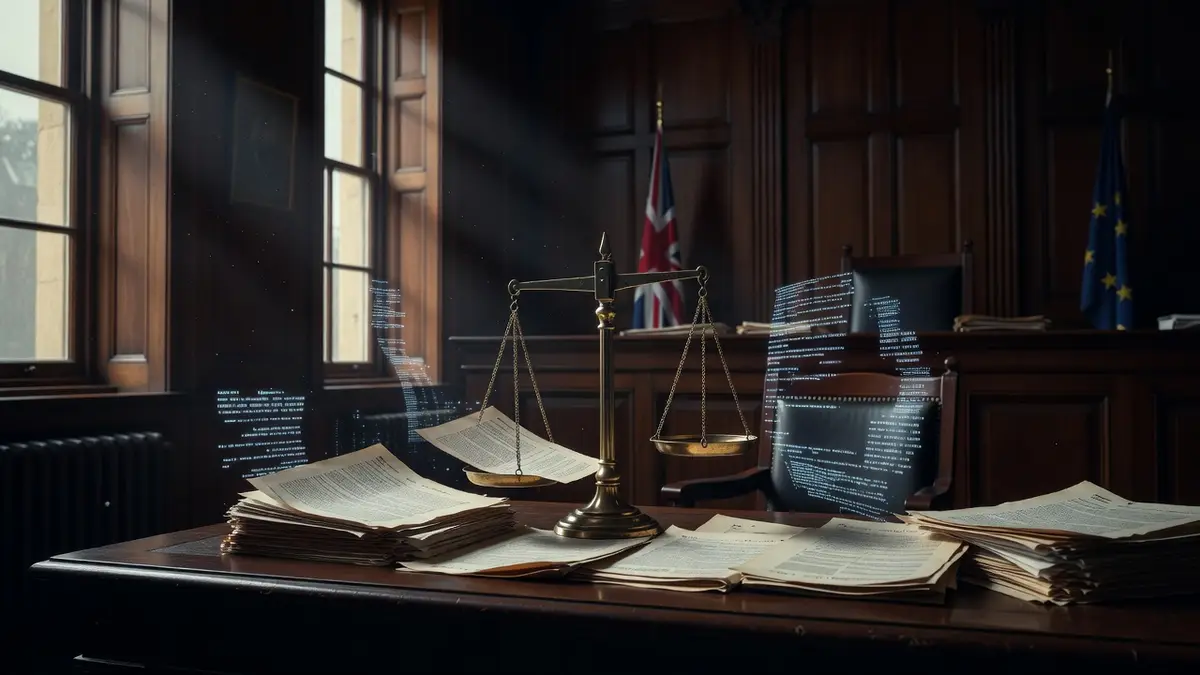
The protective shield has fallen. From 1 January 2026, owners of comparable UK trade marks can no longer rely on use in the EU to defend their rights against non-use challenges. For the roughly 1.4 million marks automatically created by the UKIPO following Brexit, only genuine UK use now counts and the first revocation actions are already landing on desks across London.
The writing was on the wall from the start. When the Brexit transition ended at 11pm on 31 December 2020, the UKIPO had to act fast. Approximately two million EU trade marks were automatically converted into comparable UK trade marks to preserve protection that would otherwise have vanished overnight.
Advertisement

A five-year transition period was introduced from 1 January 2021, which allowed owners to rely on use of the trade mark in the EU to defend their comparable trade mark in the UK. This five year period came to an end on 1 January 2026.
The Legal Cliff Edge
After 1st January 2026, since we are beyond five years following the Brexit transition date of 1st January 2021, it is no longer possible to rely on use of a mark in the EU to count as use of a UK comparable right. The window shut on 31st December 2025.
This isn't administrative housekeeping. Under section 46(1) of the Trade Marks Act 1994, an uninterrupted period of five years' non-use can render a registration vulnerable to challenge. The comparable marks, despite being created in 2021, retained their original EUTM filing dates. Many appear to have been registered for over a decade.
The vulnerability is immediate. UK cloned trademarks that have not been used in the United Kingdom will become vulnerable to revocation for non-use. This means that third parties may file for revocation, and the mark could be removed from the register solely due to non-use.
Portfolio Audit Warnings
Experts are urging owners of comparable trade marks in the UK to commence use of them ahead of a 1 January 2026 deadline. With just over one month to go before expiry, Pinsent Masons brand expert Gill Dennis said owners of comparable trade marks should look to use them before the end of 2025 to avoid losing these rights.
But the horse may have already bolted. If owners have only recommenced use knowing about the impending threat from 1 January 2026, the UK IPO may be inclined to disregard such evidence if raised in proceedings. Token efforts won't cut it either: the use must be genuine, meaning that it should involve real commercial exploitation of the mark and not simply be token use intended only to preserve the registration.
The firms I've spoken with are seeing the same pattern: businesses that operated on an EU-wide basis pre-Brexit but never established genuine UK commercial presence afterwards. EUTM-centric businesses without UK operations since 2021. If your supply, marketing and sales have been EU-only since 1st January 2021 then there would be no qualifying UK use.
Enforcement Implications
In opposition or infringement proceedings, you may be put to proof of genuine use. If there is only EU use post-2020 (with no UK use) to rely upon, the comparable UK mark will be disregarded for lack of use. This would undermine the case and often prove fatal.
From 1 January 2026, the UK IPO will not consider use in the EU to establish "reputation" in the UK where relevant in opposition or invalidation proceedings. This creates a double jeopardy: marks become vulnerable to revocation while simultaneously losing enforceability in disputes.
Strategic Responses
Re-filing isn't necessarily the answer. Filing new applications for identical marks and for identical goods and services to those marks under threat will not necessarily resolve the situation. Such applications may be considered in "bad faith", on the basis that re-filing amounts to an attempt to distort the market and seek "evergreening" protection for an unused mark. If bad faith is found, the application can be refused registration.
The strategic options narrow considerably. Portfolio managers are conducting triage: identifying genuinely valuable marks worth defending versus those that can be abandoned. The solution is simple in theory but requires action: conduct an immediate audit, focus on key areas, ensure genuine application for the UK market and make sure evidence relevant to the UK is at hand if ever needed. The output of any review could lead to narrowing specifications, making strategic UK re-filings or speeding up UK launch activities.
Fee Pressure Compounds Risk
The timing couldn't be worse. Fees will increase by an average of 25% on 1 April 2026, making portfolio maintenance significantly more expensive. The fee for filing a UK trade mark application online increasing from £170 to £205 for the first class, with additional classes rising from £50 to £60.
This marks the first fee increase in particular for trade marks since 1998. For businesses already questioning the value of maintaining unused comparable marks, the fee increase provides additional incentive to let vulnerable registrations lapse.
Market Response
The enforcement landscape is already shifting. Revocation exposure: dormant or low-use cloned marks may be removed from the UK register. Weakness in disputes: in oppositions or cancellations, cloned marks may be disregarded if UK use cannot be proven.
Competitors and brand clearing houses are taking note. Many holders are unaware of the existence of these cloned marks, creating opportunities for strategic challenges against valuable but unused registrations.
The end of the EU-use grace period represents a significant shift in how cloned UK trade marks are assessed and enforced. Owners should act now to secure evidence of UK use or reconsider the strategic value of registrations at risk. Early preparation will be essential to avoid revocations in 2026 and beyond.
The five-year grace period is over. For the 1.4 million comparable UK marks without genuine UK use, the reckoning has begun.