Brexit's Five-Year Grace Period Ends: UK Comparable Marks Now Exposed to Non-Use Revocation
From 1 January 2026, EU use can no longer defend UK trade mark clones against section 46 challenges. Portfolio audits are no longer optional.
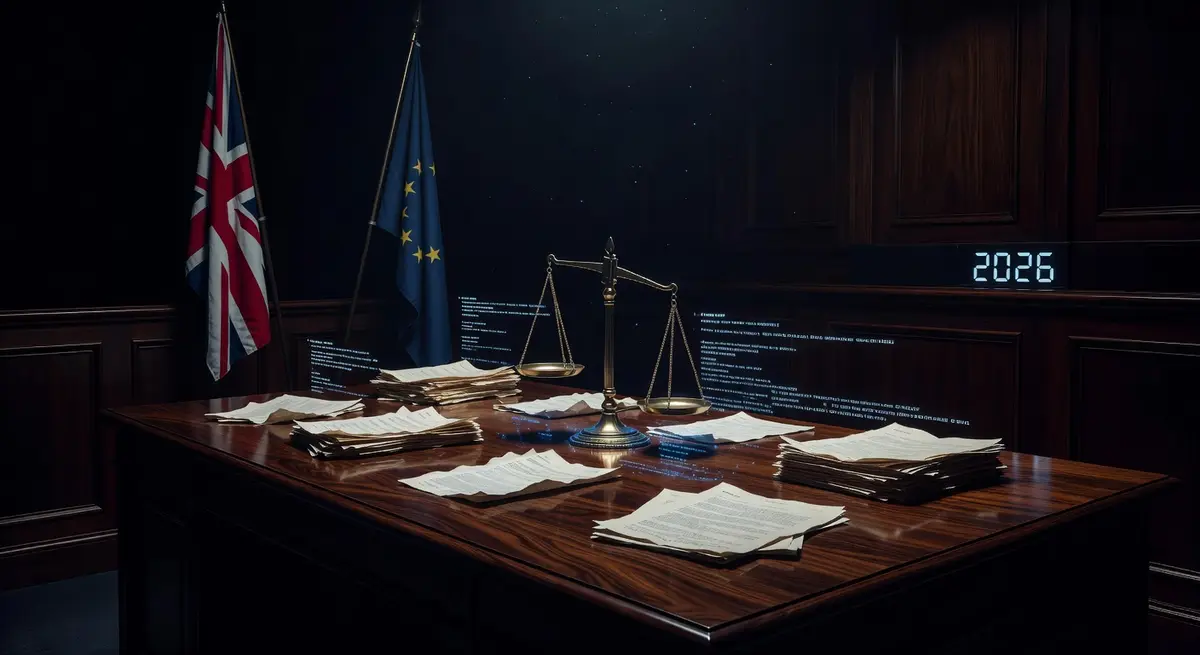
The countdown is over. As of 1 January 2026, owners of comparable UK trade marks (the 1.6 million "Brexit clones" automatically created when the UK left the EU) can no longer rely on European use to defend against revocation challenges.
The Legal Architecture Shifts
When the UK Intellectual Property Office created comparable marks on 1 January 2021, it preserved a crucial lifeline. Under section 46(1) of the Trade Marks Act 1994, any mark unused for five continuous years becomes vulnerable to revocation. But the Withdrawal Agreement provided a grace period: EU use predating Brexit could still count as genuine UK use.
That protection expired on 31 December 2025.
The practical effect is stark. Third parties can now file revocation applications targeting any comparable mark that lacks genuine UK use during the five-year period from 1 January 2021 to 1 January 2026. The UKIPO will not act independently, but competitors face no such restraint.
Token Use Won't Survive Scrutiny
Section 46(3) contains a trap for the unwary. Evidence of use beginning or resuming within three months before a revocation application "may be disregarded" unless preparations began before the owner knew of the threat. With the 1 January 2026 deadline widely publicised, any UK activity commenced in late 2025 risks being dismissed as defensive positioning rather than genuine commercial exploitation.
The cases are unforgiving on what constitutes genuine use. Token activities (internal use, minimal sales intended solely to preserve registration) do not qualify. The mark must be "put to genuine use in the ordinary course of trade" for the specific goods and services claimed.
Portfolio Audit Strategy
IP attorneys report a surge in portfolio reviews as the deadline approached. The methodology is straightforward but labour-intensive: identify all comparable marks (those carrying UK008 or UK009 prefixes), map actual UK commercial activity against registered specifications, and assess evidence quality.
"Run a UK use audit, mark by mark," advises Swindell & Pearson's guidance. The evidence hierarchy is clear: sales data, invoices showing UK delivery, marketing materials with clear UK targeting, distributor agreements specifying UK territory. Screenshots of UK-facing websites, pound-denominated pricing, and UK-specific advertising campaigns all strengthen the position.
The Enforcement Dimension
Revocation risk represents only half the exposure. Comparable marks without UK use also lose enforcement strength. In opposition proceedings, rights holders must prove genuine use when challenged. A mark surviving only on EU activity cannot support objections to conflicting applications.
This creates asymmetric risk. While owners of unused comparable marks face attack, competitors with genuine UK use gain offensive opportunities against dormant registrations.
Strategic Responses
For marks where UK expansion remains commercially viable, immediate action can still provide defensive benefit. Evidence of preparations predating public awareness of the deadline (licensing negotiations, market research, product adaptation for UK requirements) may support resumed use arguments.
But hasty activity invites scrutiny. "Qualitative use" requires genuine commercial substance: advertising campaigns, packaging displaying UK contact details, retail partnerships, localised digital marketing demonstrating UK market targeting.
The Numbers Game
The scale is significant. Approximately 1.6 million comparable marks were created in 2021. While many owners maintained parallel UK operations, others relied exclusively on EU-wide strategies. Law firms report clients discovering comparable marks they never knew existed (automatic creation required no formalities or notification).
This information asymmetry creates opportunity. Businesses seeking to clear trademark obstacles can target dormant comparable marks through strategic revocation applications. The cost of challenging unused marks is often lower than negotiating coexistence agreements.
What Comes Next
The immediate deadline has passed, but consequences will emerge gradually. Revocation applications take months to resolve. Owners discovering vulnerability may choose voluntary surrender rather than defending weak positions.
For IP practitioners, the comparable mark transition shows how Brexit's legal complexity extends beyond initial implementation. Five years later, automated solutions create new problems requiring active management.
The grace period's end marks a permanent shift in UK trade mark strategy. EU use and UK use are now completely separate legal territories. Portfolio management requires independent assessment of both jurisdictions' requirements.