AI Disclosure Trap: How Feeding Ideas to ChatGPT Could Kill Your Patents
USPTO guidance warns inventors that AI-assisted brainstorming may trigger public disclosure bars, forcing a fundamental shift in patent strategy.
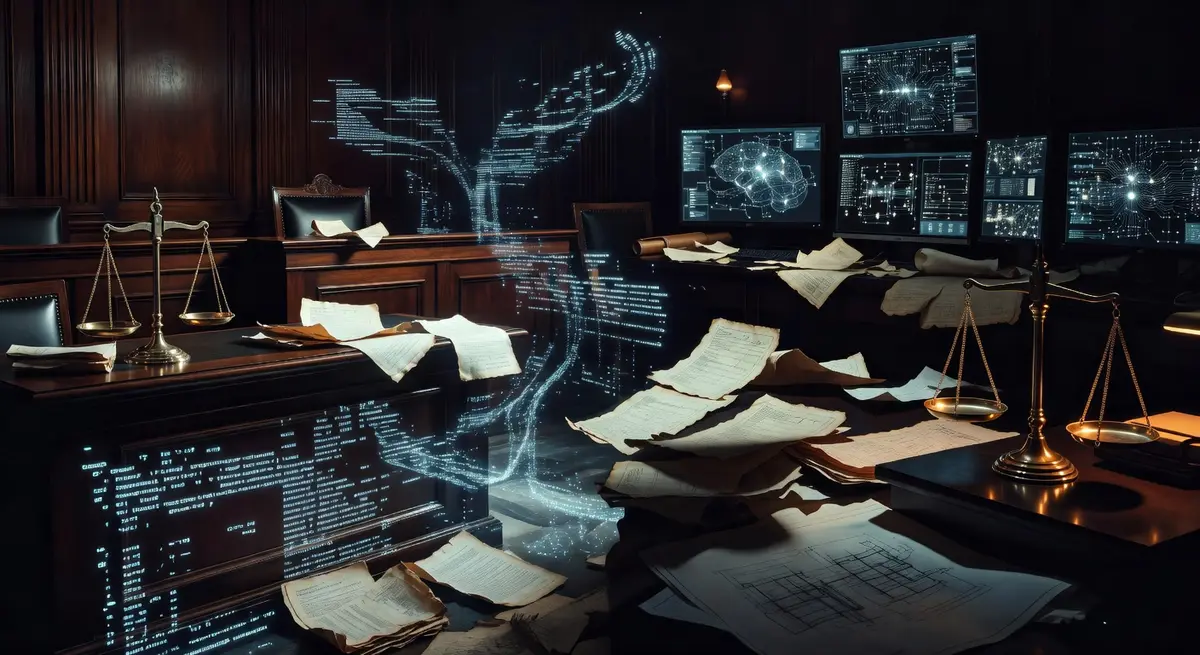
Patent attorneys are sounding alarms about an invisible threat to innovation: the casual use of AI platforms for idea development may be inadvertently destroying patent rights before inventors even file applications.
The warning comes as practitioners grapple with new guidance from the USPTO that reframes generative AI as "a tool, analogous to laboratory instruments" while maintaining that only humans can be inventors. But the real trap lies in the disclosure rules that most inventors don't see coming.
Advertisement

The Public Disclosure Problem
When an inventor submits technical concepts to platforms like ChatGPT, Claude, or Gemini for refinement or analysis, they may be creating a public disclosure that starts the one-year statutory clock for patent filing. Under 35 U.S.C. § 102(a)(1), any public disclosure of an invention creates a bar to patentability unless an application is filed within twelve months.
"Most AI platforms retain conversation logs and use them for training future models," explains David Jordan, a principal at Fish & Richardson who has been tracking the issue. "That retention could constitute public disclosure, even if the inventor believes their session was private."
The problem is acute because AI tools have become integral to the invention process. Engineers routinely feed technical problems to ChatGPT to explore solutions. Researchers use Claude to analyse experimental data. Designers prompt Midjourney to generate concepts. Each interaction potentially creates prior art against their own future patent applications.
The Documentation Defence
The USPTO's November 2025 guidance offers a pathway through this minefield, but it requires meticulous documentation. Inventors must establish clear records of their human contributions before engaging AI tools (a practice few currently follow).
"The key is temporal documentation," Jordan advises. "Inventors need to document their independent, human contributions before feeding concepts into AI systems." This means dated lab notebooks, timestamped design sketches, and recorded brainstorming sessions that establish human conception prior to AI assistance.
The guidance specifically notes that "conception" remains an inherently human act, but proving that conception occurred before AI involvement requires evidence most inventors aren't collecting.
Industry Pushback and Practical Limits
Not everyone accepts the premise that AI platform interactions constitute public disclosure. Some practitioners argue that terms of service and privacy policies create reasonable expectations of confidentiality, potentially defeating the "public" nature of any disclosure.
"The statutory language requires that information be 'otherwise available to the public,'" notes one patent attorney who requested anonymity. "Platform interactions behind login walls with confidentiality terms may not meet that standard."
That's a dangerous bet. Patent law favours bright-line rules, and courts have historically interpreted disclosure provisions broadly. The Federal Circuit has repeatedly held that even limited disclosures can bar patentability if they make information "otherwise available."
Strategic Shifts Already Underway
Companies are already adjusting their innovation workflows. Some have implemented "AI-first" documentation policies that require inventors to record human contributions before any AI interaction. Others are deploying private AI instances with contractual guarantees about data handling.
"We're seeing clients completely restructure their R&D documentation practices," reports another IP practitioner. "The traditional post-invention disclosure is becoming pre-invention documentation."
The shift reflects a broader realisation that AI assistance, while powerful, comes with hidden legal costs. Every prompt risks creating prior art. Every iteration potentially starts statutory clocks ticking.
What's Next
The issue is likely headed for judicial resolution as the first wave of AI-assisted patents faces examination. Patent examiners are already questioning the timing and nature of AI involvement in disclosed inventions. Competitors are beginning to mine platform data for prior art references.
"This is a venue-shopping exercise disguised as efficiency," warns one seasoned practitioner. "Companies that don't adjust their practices now will find themselves explaining to judges why their AI-generated prior art shouldn't invalidate their own patents."
The USPTO has indicated it will publish additional guidance on AI disclosure issues later this year. Inventors can't wait for regulatory clarity. The statutory clocks are already ticking, and the documentation requirements are immediate.
The safest path remains the most conservative: document first, prompt second, and never assume that an AI interaction is truly private. The alternative is discovering that your most valuable innovations have been disqualified by your own digital breadcrumbs.